
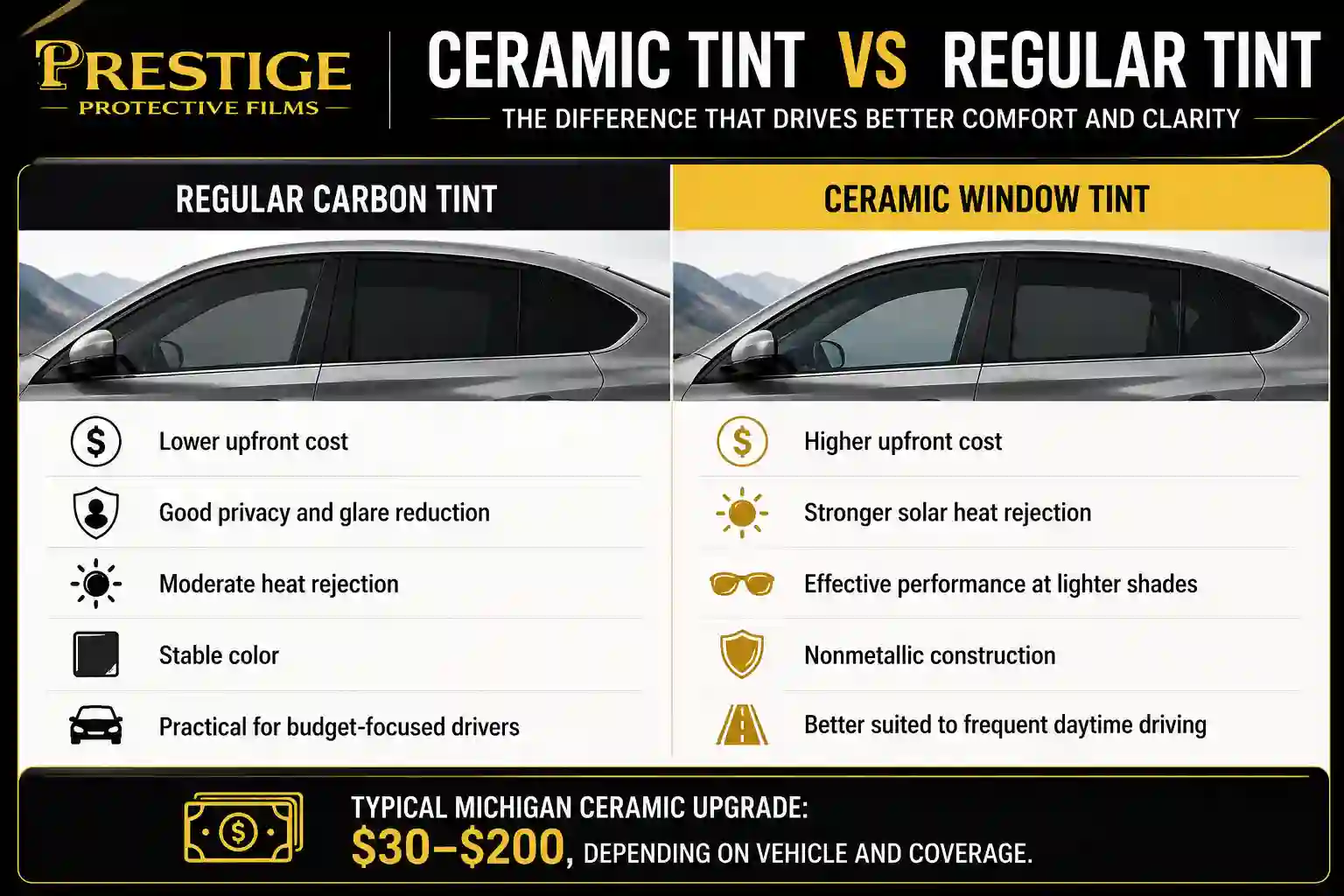
Ceramic window tint is worth it in Michigan when heat control, daytime comfort, and long ownership matter. Regular carbon film costs less and still improves privacy, appearance, glare, and UV protection. Ceramic commonly adds $30 to $200, depending on coverage.
Prestige Protective Films installs premium ceramic auto tint in Waterford, MI. This comparison explains Michigan prices, performance measurements, legal considerations, and drawbacks. It also identifies when a ceramic upgrade provides meaningful value.
Is Ceramic Window Tint Worth the Extra Cost in Michigan?
Ceramic tint earns its premium when reducing radiant heat is the main goal. It can improve comfort during sunny Michigan commutes without requiring the darkest available shade. Performance still varies by product and glass.
Regular carbon tint remains a strong value for appearance, glare control, privacy, and color stability. Many carbon films also block high levels of ultraviolet radiation. Ceramic construction does not automatically make every specification superior.
The best choice depends on film data, vehicle glass, coverage, driving schedule, and ownership period. Compare both products at the same VLT. This approach separates film technology from darkness.
How Much Do Ceramic and Regular Tint Cost in Michigan?
Michigan installers commonly charge $30 to $200 more for ceramic film. The difference grows with window count and premium product tier. A large SUV or panoramic roof can widen the gap.
| Coverage | Regular Carbon Tint | Ceramic Tint | Typical Ceramic Premium |
| Two front windows | $99 to $150 | $129 to $220 | $30 to $70 |
| Sides and rear | $250 to $375 | $325 to $550 | $100 to $200 |
| Full windshield | $100 to $200 | $140 to $250 | $40 to $100 |
| Sides, rear, and windshield | $300 to $450 | $375 to $650 | $75 to $250 |
| Premium nano-ceramic coverage | Not applicable | $500 to $850+ | Product dependent |
These 2026 figures reflect published Michigan menus, not fixed Prestige prices. Old-film removal, difficult glass, extra windows, and premium warranties can raise the final quote.
What Is the Difference Between Ceramic and Regular Tint?
The term regular tint can mean dyed or carbon film. Dyed film creates shade at the lowest price but offers limited heat performance. Carbon film provides better color stability and heat rejection without using ceramic particles.
Ceramic film contains nonmetallic ceramic materials designed for stronger solar performance. Premium versions often target infrared heat while maintaining lighter visible shades. Product construction and published specifications still vary.
Prestige Protective Films offers 3M Ceramic IR and XPEL ceramic options. A film sample and specification sheet provide a better comparison than the ceramic label alone.
Does Ceramic Tint Reject More Heat Than Regular Tint?
Many ceramic films reject more solar heat than regular dyed or carbon films at a comparable VLT. The difference feels most noticeable while sunlight strikes occupants through the glass.
Total Solar Energy Rejection, called TSER, measures the total solar energy rejected by filmed glass. Infrared rejection measures only part of the solar spectrum. A high IR number doesn’t capture all incoming solar heat.
Drivers can compare full-vehicle window tint packages in Waterford before choosing coverage. Ask for TSER, VLT, UV rejection, and warranty data for each proposed film.
When Is Ceramic Window Tint Worth Paying For?
Ceramic film usually offers the best value for frequent daytime travel, outdoor parking, long commutes, and vehicles kept for several years. Large windshields and panoramic roofs increase direct solar exposure.
Prestige Protective Films can compare film samples on the vehicle’s factory glass. Cabin color, glass angle, factory tint, and shade affect appearance. Heat performance should come from technical data, not a hand-held display alone.
Drivers seeking heat-rejecting ceramic tint for Auburn Hills commuters can also compare partial and whole-vehicle coverage. Targeting the most exposed glass may control the upgrade cost.
When Is Regular Carbon Tint the Better Value?
Carbon tint may provide better value when privacy, appearance, and glare reduction matter more than maximum heat rejection. It can also suit a leased vehicle or shorter ownership period.
A garage-kept car with limited daytime use may not benefit enough from the ceramic premium. Carbon can provide a stable color and nonmetallic construction at a lower price. Warranty terms remain product-specific.
Budget allocation also matters. Quality installation with a reputable carbon film can outperform poorly installed ceramic film. Clean preparation, precise patterns, protected electronics, and edge quality affect the result.
How Do Tint Costs Change by Vehicle and Coverage?
Vehicle design affects both film quantity and labor. Quarter windows, frameless doors, steep rear glass, sensors, and large windshields can increase installation time.
| Vehicle Type | Regular Carbon | Ceramic | Premium Ceramic |
| Coupe or compact car | $250 to $375 | $325 to $500 | $450 to $650+ |
| Sedan | $275 to $425 | $350 to $600 | $500 to $750+ |
| Crossover or midsize SUV | $325 to $500 | $425 to $700 | $575 to $850+ |
| Truck or large SUV | $350 to $550 | $475 to $800 | $650 to $950+ |
The table represents broad sides-and-rear or comparable whole-cabin planning ranges. A windshield, sunroof, old-film removal, or unusual glass can add cost. Written coverage prevents package misunderstandings.
Is Ceramic Tint Worth It for a Windshield or Panoramic Roof?
A light ceramic windshield film can target a major source of solar exposure while preserving a lighter appearance. Michigan placement and visibility rules still control which applications are lawful.
Panoramic roofs create another large solar opening. Some factory roof glass already has solar-control properties. The installer should confirm glass compatibility before recommending aftermarket film.
Windshield ceramic commonly costs $140 to $250 in Michigan. Premium products can cost more. Panoramic roof prices depend on glass size, access, curvature, and film compatibility.
What Are the Disadvantages of Ceramic Window Tint?
The main disadvantage is price. Ceramic film may cost $75 to $250 more for broad vehicle coverage. Premium nano-ceramic products can widen that difference further.
Ceramic tint does not keep a parked cabin cool indefinitely. Interior temperatures still rise as the vehicle absorbs solar energy. The film reduces heat transfer and can improve comfort, but it cannot eliminate heat buildup.
The ceramic label can also hide weak comparisons. Shops may promote a narrow infrared measurement while omitting TSER. Poor installation can still cause contamination, creases, light gaps, or damaged components.
Does Ceramic Tint Change Privacy, Darkness, or Night Visibility?
Ceramic construction does not determine privacy or darkness. Visible Light Transmission, called VLT, describes how much visible light passes through filmed glass. Lower VLT creates a darker finished appearance.
Ceramic film can provide stronger heat rejection at lighter shades than many basic films. This benefit does not guarantee legal placement. Factory glass and aftermarket film combine to create the finished VLT.
Night visibility depends mainly on finished VLT, lighting, glass angle, and driver vision. A dark ceramic film can reduce outward visibility just like another dark film. Ceramic technology cannot cancel that tradeoff.
How Should Michigan Drivers Compare Window Tint Quotes?
Each quote should name the manufacturer, film series, VLT, window coverage, warranty, removal cost, tax, and expected installation time. “Ceramic tint” alone does not identify performance.
Ask for specification sheets on the exact shade. Compare TSER at similar VLT levels and glass conditions. Also confirm UV rejection, visible reflectance, signal compatibility, and warranty exclusions.
The shop should measure existing glass before recommending film. This step matters for factory privacy glass and prior aftermarket tint. Written measurements reduce legal and appearance surprises.
Which Performance Numbers Matter Most?
TSER provides the clearest single measure of total solar heat rejection. VLT describes visible light transmission, while UV rejection addresses ultraviolet exposure. Each value answers a different question.
The IWFA 2026 Automotive Education Guide warns that infrared rejection values may use different wavelength ranges. It recommends reviewing IR figures alongside TSER or Solar Heat Gain Coefficient.
Compare data measured on similar glass because factory glass changes finished performance. Marketing percentages without test conditions cannot support a fair product comparison.
Conclusion
Ceramic window tint is worth it in Michigan when stronger heat rejection, longer ownership, and daytime comfort justify the premium. Regular carbon tint remains a sensible choice for privacy, appearance, glare control, and lower upfront cost.
Compare exact products at similar VLT levels and glass conditions. Prestige Protective Films can measure the vehicle and explain the cost difference before installation.
Frequently Asked Questions
Is upgrading from regular tint to ceramic window tint worthwhile?
Ceramic tint can justify its higher price when heat rejection, daytime comfort, and long-term ownership are the main priorities. Regular carbon tint remains a practical choice for privacy, glare reduction, and appearance. It also provides UV protection when you don’t need maximum solar performance.
Is 20% window tint permitted under Michigan law?
A 20% tint is not automatically legal on every Michigan window. State law restricts film on the windshield and front side windows. Exceptions include the permitted upper area or a medical exception. You may use nonreflective tint behind the driver when the vehicle meets the mirror requirements.
Does ceramic tint provide clearer vision than regular tint?
Ceramic tint does not automatically provide clearer vision than regular tint. Outward visibility depends mainly on the finished VLT, lighting, glass, and film quality. At the same VLT, ceramic film may offer strong heat rejection without requiring a darker shade. Clarity varies by product.
Can Michigan police stop a vehicle only because of its window tint?
Michigan police may stop a vehicle when an officer reasonably suspects its window film violates equipment rules. Tint can therefore be the reason for a traffic stop. Front-window placement, driver visibility, rearview mirrors, and excessive reflectivity can affect compliance.
What drawbacks should drivers consider before choosing ceramic tint?
The main downsides of ceramic tint are its higher installation price and confusing performance claims between products. It cannot prevent a parked cabin from eventually becoming hot. Poor installation can still produce contamination, creases, light gaps, damaged trim, or premature edge failure.
Can drivers see clearly at night through ceramic window tint?
Drivers can see through ceramic tint at night, but visibility depends on finished VLT, not ceramic construction alone. Darker film allows less visible light through and can make unlit roads harder to see. A lawful, moderate shade usually preserves better nighttime visibility than very dark film.