

Every Waterford driver asks some version of the same question. PPF vs ceramic coating, which one actually protects a car better? Road salt, loose gravel, and Michigan’s harsh summer sun wear down factory paint at different speeds. Prestige Protective Films fields this question daily from owners comparing full paint protection film installation against a ceramic coating package. The right answer depends on the type of damage a vehicle faces most. This guide breaks down what each product does, where each one wins, and when combining both makes sense.
What Is Paint Protection Film and How Does It Work
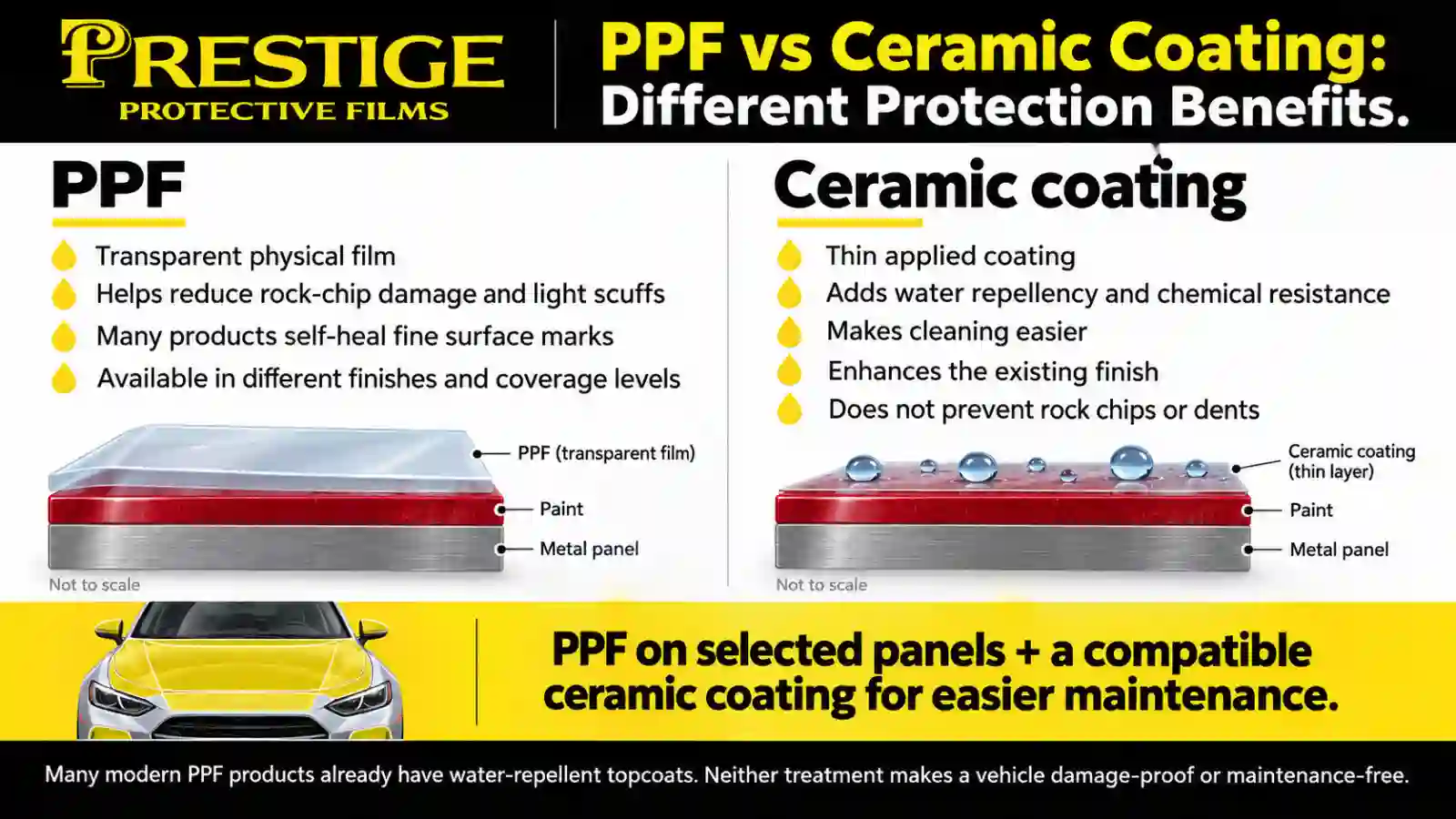
Paint protection film, often shortened to PPF, is a clear urethane film applied directly to painted panels. Installers stretch it over the hood, fenders, bumper, and mirrors, then trim it precisely to each edge. The film bonds to the clear coat and becomes a sacrificial layer. It absorbs impact instead of letting it reach the paint.
Self-Healing Technology and Film Thickness Explained
Most professional-grade films, including XPEL Ultimate Plus, measure around 8 mils thick. That thickness comes from a topcoat built with self-healing polymers. Light swirl marks and shallow scratches soften and disappear under direct sunlight or a heat gun. The finish clears up again without polishing or touch-up paint.
What PPF Actually Protects Against
PPF handles physical threats first. Rock chips, key scratches, minor door dings, and fine scuffing all get absorbed by the film. None of it reaches the paint underneath. PPF also blocks UV rays from reaching the clear coat, which slows long-term fading on dark colors especially.
Where PPF Falls Short on Its Own
Raw film still holds dirt and water the way factory paint does. The polymer surface is not naturally hydrophobic without a ceramic topcoat added on top. Film can also look dull faster and collect water spots from Michigan’s hard well water in some townships.
What Is Ceramic Coating and How Does It Protect Paint
Ceramic coating is a liquid polymer, usually built around silicon dioxide nanoparticles. It chemically bonds to the clear coat once cured, filling microscopic pores in the paint. The result hardens into a glass-like layer within a few days. Prestige Protective Films applies every ceramic coating package inside a controlled, dust-free bay so the bond cures evenly.
The Hydrophobic Layer and Why It Matters
That cured layer is hydrophobic, so water beads tightly and rolls off instead of sheeting flat. Road grime, bird droppings, tree sap, and pollen slide off far more easily during a routine wash. The same layer deepens gloss and adds a wet-look shine that stands out at local car shows.
What Ceramic Coating Cannot Do
Ceramic coating will not stop a rock chip, a deep key scratch, or a parking lot door ding. It is a chemical shield against oxidation, UV fade, and chemical staining, not a physical buffer. Owners who expect it to behave like body armor are usually disappointed after one gravel road trip.
PPF vs Ceramic Coating: Key Differences at a Glance
| Factor | Paint Protection Film | Ceramic Coating |
| Primary protection | Physical impact, rock chips, scratches | Chemical resistance, UV fade, staining |
| Typical lifespan | 5 to 10 years | 1 to 9 years, based on tier |
| Michigan cost range | $900 partial front to $9,000+ full vehicle | $500 entry tier to $3,000+ pro-grade |
| Hydrophobic beading | Minimal on its own | Strong, noticeable on first wash |
| Self-healing | Yes, with heat exposure | No |
| Gloss enhancement | Slight, film-dependent | Significant, deepens color depth |
| Rock chip resistance | Strong | Weak |
| Best paired with | Ceramic topcoat for gloss and easy cleaning | PPF on high-impact panels first |
The lifespan gap surprises most first-time buyers. Ceramic coating often gets sold as one product instead of a tiered system with real range. Entry, mid, and long-term tiers all exist and price out differently. The full ceramic coating cost guide breaks each tier down by vehicle size and durability rating.
Which Protection Is Best for Waterford and Southeast Michigan Drivers
Southeast Michigan roads throw two different threats at a hood across one year. Winter brings road salt and brine along corridors like Elizabeth Lake Road and M-59. Summer construction season kicks up loose gravel on I-75 and local surface streets. Prestige Protective Films is based in Waterford Township, and the shop watches this seasonal split play out every year. The pattern repeats across the entire Southeast Michigan service area.
Best Choice for Daily Drivers Facing Road Salt and Gravel
Daily drivers commuting through winter brine and summer construction zones get the most value from PPF. Coverage on the front bumper, hood, and mirrors absorbs the chips that salt-slick roads and loose gravel throw up constantly. Ceramic coating alone will not stop that kind of pitting.
Best Choice for Show Cars and Weekend Drivers
Weekend cars and garage-kept vehicles that see less road exposure often do fine with ceramic coating alone. The gloss boost and faster washing matter more than impact protection here. Many owners still add partial-front PPF for peace of mind on longer trips.
Why Luxury and Exotic Car Owners Often Choose Both
The Waterford Township shop works with a heavy share of Tesla, Porsche, BMW, Corvette, and Rivian owners across Oakland County. The buying pattern stays consistent among this group. High-value paint jobs depreciate fast once chipped, so full-body PPF gets treated as standard equipment rather than an upgrade. Ceramic coating gets layered on top afterward for the deep gloss that show-quality vehicles are judged on.
Electric vehicles bring their own wrinkle. Factory paint on models like the Tesla Model 3 and Model Y often runs thinner than legacy gasoline vehicles. That thinner clear coat chips more easily and shows swirl marks faster under detailing lights. The Tesla PPF vs ceramic coating breakdown covers that specific comparison in more depth for EV owners.
Can PPF and Ceramic Coating Be Combined for Maximum Protection
Combining both is the most common recommendation for daily-driven vehicles across Michigan, and the order matters. PPF goes on first, covering the high-impact panels most exposed to chips and road debris. Ceramic coating is then applied over both the film and the remaining bare paint. That seals everything under one continuous hydrophobic layer.
This layered approach protects the film itself from staining and yellowing over time. It also boosts water-beading performance well beyond what raw film offers alone. Fewer separate maintenance products are needed too, since one ceramic-safe wash routine covers both surfaces. Owners handling new car protection during the first 90 days typically see the most value. Doing both treatments early pays off long before road debris starts adding up.
How to Maintain PPF and Ceramic Coating Once Installed
Both products reward the same basic habits day to day. Hand washing with a pH-neutral soap extends the life of either service considerably. So does avoiding automatic brush car washes and drying with a clean microfiber towel.
Washing Habits That Protect the Investment
Automatic brush washes can lift film edges over several visits. They also strip the slickness out of a ceramic layer within a single season. Touchless washes or a two-bucket hand wash routine protect both surfaces far better. Frequent rinsing between full washes matters most during Michigan’s salty winters.
When to Inspect and Refresh Each Service
PPF should be checked periodically for lifting at the edges, especially around mirrors and door handles. Those spots flex the most during daily use and loosen first. Ceramic coating benefits from a maintenance spray every few months to top off the hydrophobic effect. Understanding what causes ceramic coating to fail helps owners avoid the mistakes that cut a coating’s life short.
Common Myths About PPF and Ceramic Coating
A few misconceptions keep showing up in customer conversations. Most of them lead to disappointment down the road when left unaddressed.
Myth: ceramic coating means never washing the car again. Regular washing is still required with ceramic coating installed. The coating just makes each wash faster and reduces how tightly dirt bonds to the surface.
Myth: PPF looks thick or obvious on a vehicle. Quality film such as XPEL’s self-healing film sits virtually invisible once installed. The factory look stays intact.
Myth: self-healing PPF fixes any kind of damage. Heat exposure only reverses shallow swirls and light surface scratches. Deep gouges or punctures still need panel-specific film replacement, not a heat gun session.
Myth: combining PPF and ceramic coating is redundant. The two products solve different problems, one physical and one chemical. Layering them covers both weaknesses instead of leaving a gap.
PPF vs Ceramic Coating Cost Comparison for Michigan Vehicles
Cost is usually the deciding factor once protection needs are clear. PPF runs from roughly $900 for a partial front package to $3,000 for full front coverage. A full-vehicle wrap on a larger SUV or exotic can reach $9,000 or more. Ceramic coating starts near $500 for an entry-tier package. Show-grade coatings on a larger truck can climb past $3,000.
Add-ons shift both totals in smaller ways. Door cups, headlight film, and mirror caps typically add $100 to $500 to a PPF package. Wheel faces, glass coating, and exterior trim can add $150 to $900 to a ceramic package. Paint correction before either service adds another $250 to $1,500 depending on how many stages the paint needs.
The higher PPF price reflects labor-intensive panel work and long-term impact protection. That cost pays off through avoided repaint bills down the line. Ceramic coating costs less upfront but needs refreshing sooner unless a premium multi-year tier gets chosen. The full paint protection film cost guide lists exact 2026 Michigan pricing by vehicle type and coverage level.
So Which Is Actually Best for Your Car
No single winner exists between PPF and ceramic coating. The two products solve different problems on the same vehicle. Choose PPF when rock chips, road debris, and resale-value paint preservation matter most. Choose ceramic coating when gloss, easier washing, and chemical resistance take priority.
Most Southeast Michigan vehicles end up better protected with both, layered in the correct order. Prestige Protective Films reviews each vehicle’s exposure, driving habits, and budget before recommending a mix. That beats defaulting to whichever service is easier to sell. The complete vehicle protection guide covers how PPF, ceramic coating, tint, and wraps fit together for Waterford drivers.
Frequently Asked Questions
Can ceramic coating be applied directly over paint protection film?
Yes, applying ceramic coating directly over cured paint protection film is a common, recommended combination for Michigan vehicles. It shields the film from staining and UV yellowing while adding stronger hydrophobic beading and deeper gloss on top of the film’s impact protection.
How long does PPF actually last compared to ceramic coating on a daily driver?
PPF typically lasts 5 to 10 years with proper care and a quality installation, while ceramic coating lasts anywhere from 1 to 9 years depending on the tier chosen. Michigan road salt, winter brine, and heavy daily driving can shorten both slightly compared to garage-kept vehicles.
What are the different grades or tiers of PPF film?
Paint protection film comes in gloss, matte, satin, and black finishes, plus coverage tiers from partial front packages to full-vehicle wraps. Higher-grade films, like XPEL Ultimate Plus, add thicker self-healing topcoats and manufacturer warranties that can run close to ten years.
Does ceramic coating over PPF stop the film from self-healing?
No, a properly applied ceramic topcoat does not block PPF’s self-healing ability at all. The film’s polymer layer still reacts to heat from sunlight or a heat gun through the thin ceramic layer above it, so light scratches and swirl marks soften the same way they would on uncoated film.
Is paint protection film worth it for a luxury or exotic car?
Yes, full-body PPF is especially valuable for luxury and exotic cars, since many EVs and high-end models use thinner factory clear coats that chip easily on impact. It preserves resale value on expensive panels and keeps a show-quality finish intact through Michigan’s rough winter roads and gravel.
Does ceramic window tint work well combined with PPF?
Yes, ceramic window tint and paint protection film work well together because they protect different surfaces on the same vehicle. PPF shields painted body panels from rock chips and scratches, while ceramic tint blocks heat and UV rays through the glass, and both hold up for years.