
Window tint cost in Michigan in 2026 depends on film, vehicle, glass count, and coverage. Michigan shop menus show prices from about $125 for two windows to $700 or more for large premium-film projects. Prestige Protective Films publishes starting prices for XPEL-certified car window tinting in Waterford, MI. This guide separates those local prices from broader planning ranges and explains what a quote should include.
What Does Window Tint Cost in Michigan in 2026?
Most professional Michigan projects fall between $125 and $800. A two-window package sits near the lower end. Full ceramic coverage on a large or complex vehicle reaches the upper end.
Film quality creates much of that spread. Dyed film is usually the least expensive, carbon occupies the middle, and ceramic costs more. Vehicle size, old film, curved glass, and extra windows can change each range.
These figures are planning ranges from live Michigan service menus, not fixed statewide rates. A written vehicle-specific quote remains the reliable final price.
| Project Type | Typical Michigan Planning Range | Common Scope |
| Two front windows | $125–$199 | Driver and front-passenger windows |
| Full car, dyed or standard film | $225–$400 | Side and rear glass, usually excluding windshield |
| Full car, ceramic film | $350–$700+ | Side and rear glass with higher-performance film |
| SUV or truck | $350–$800+ | Price changes with size, glass count, and film |
| Windshield film or visor strip | $75–$299 | Scope and legal application must be confirmed |
| Old tint removal | Quoted after inspection | Film condition and adhesive determine labor |
What Are the Published Window Tint Prices in Waterford?
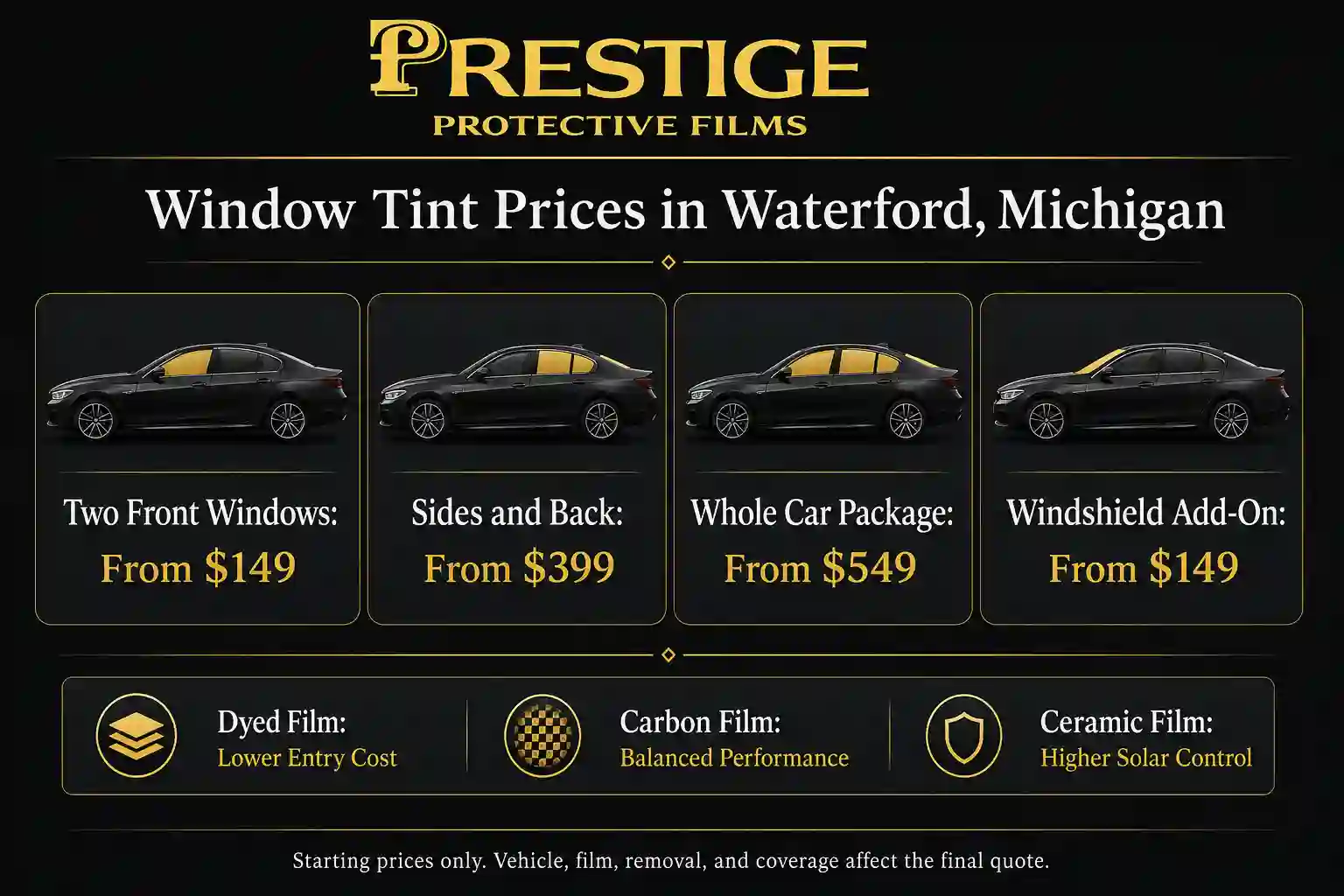
Prestige Protective Films currently lists four starting package prices. Two front windows start at $149. Sides and back start at $399, while the whole-car package starts at $549.
The windshield add-on starts at $149. Published prices are starting points, so film series and vehicle details still matter. The sides-and-back and whole-car descriptions also overlap, making a written glass list important.
Ask which film comes with each starting price. The quote should also state tax, removal, sunroof coverage, quarter windows, and warranty terms.
| Published Package | Starting Price | Detail to Confirm |
| Two front windows | $149 | Film series and final VLT |
| Sides and back | $399 | Exact side, quarter, and rear glass included |
| Whole car | $549 | Coverage, film tier, and windshield exclusion |
| Windshield add-on | $149 | Film, legal placement, and glass coverage |
How Does Film Type Change Window Tint Cost?
Dyed Film
Film construction affects price, heat control, clarity, color stability, and warranty. Dyed film usually offers the lowest entry price. Its heat performance and long-term color stability vary by product quality.
Carbon Film
Carbon film often sits between dyed and ceramic products. It provides stable color and moderate solar control without metallic signal interference. Availability and price depend on the installer’s product lineup.
Ceramic Film
Ceramic film usually costs the most because it targets stronger solar performance and optical clarity. Drivers can compare infrared ceramic tint options for Waterford drivers before choosing a package. Compare the exact product line, shade, and data on each quote.
| Film Category | Typical Full-Car Range | Main Buying Priority |
| Dyed | $225–$400 | Appearance and lower entry cost |
| Carbon | $300–$550 | Balanced price, color stability, and comfort |
| Ceramic | $350–$800+ | Stronger solar control and premium clarity |
How Much Does Tint Cost by Vehicle Type?
Vehicle class affects glass area, window count, pattern complexity, and installation time. Prestige Protective Films prices each project around the actual vehicle rather than the model category alone. Two SUVs can require different labor when one has extra quarter glass or a panoramic roof.
Sedans and coupes often fall below large SUVs and vans. Trucks may look simple, but sliders and curved rear glass add work. Frameless doors, deep seals, and large hatch glass can also raise labor.
Tesla and other EV designs may have large glass panels or unusual rear windows. Their cost depends on actual coverage, not the powertrain. A model name should never replace an itemized glass list.
| Vehicle Type | Typical Planning Range | Common Price Drivers |
| Coupe | $225–$500 | Fewer windows, but rear-glass curvature matters |
| Sedan | $250–$650 | Film tier, rear glass, and quarter windows |
| Pickup truck | $275–$700+ | Cab style, rear slider, and window count |
| Small or midsize SUV | $325–$700+ | Added glass area and rear hatch |
| Large SUV or van | $400–$800+ | More windows, more film, and longer installation |
| EV or specialty vehicle | Vehicle-specific | Glass design, roof panels, electronics, and access |
What Factors Change a Window Tint Quote?
Coverage creates the first major price difference. Front-two, sides-and-back, whole-car, windshield, visor-strip, and sunroof packages require different amounts of film and labor. The phrase “full car” does not always include the windshield or roof glass.
Film removal can add substantial labor when old adhesive has hardened. Curved rear windows, small quarter windows, door-panel access, and embedded electronics can also affect the price. An installer may need more preparation time for contamination or damaged glass.
Legal placement matters before finalizing coverage. Drivers should review Michigan window tint placement rules before comparing shade options. A low quote has little value if the proposed installation doesn’t meet state requirements.
How Much Do Tint Removal and Add-Ons Cost?
Old tint removal is usually priced after inspection. Clean film may release quickly, while brittle layers and baked adhesive take longer. Rear defroster lines also require careful work, which can increase labor.
Windshield strips, full windshield film, sunroofs, panoramic roofs, and small quarter windows are commonly priced separately. Michigan menus show windshield-related work from about $75 to $299. That range reflects different products, coverage, and glass sizes.
A quote should separate each add-on rather than hiding them in one total. Drivers can then remove optional work without changing the main package. This structure also prevents misunderstandings about what “whole car” includes.
| Possible Add-On | Why Price Varies |
| Old tint removal | Film age, adhesive, layers, and defroster access |
| Windshield visor strip | Width, film, and permitted placement |
| Full windshield film | Glass size, film type, sensors, and legal use |
| Sunroof or panoramic roof | Glass area, curvature, and heat-forming time |
| Quarter windows | Number, access, seals, and small-pattern work |
| Tint meter check | Existing factory glass and finished-light measurement |
Is DIY Window Tint Cheaper Than Professional Installation?
DIY tint costs less upfront because the buyer supplies the labor. Kits may still require film, blades, slip solution, cleaning tools, heat equipment, and replacement material. A failed attempt can make the final professional job more expensive.
Common DIY problems include contamination, creases, light gaps, damaged seals, and poor rear-glass shaping. Removing a failed application adds time and adhesive cleanup. Rear defroster damage can create a much larger repair bill.
Professional work combines surface preparation, vehicle-specific patterns, controlled application, and warranty coverage. The value depends on installer skill and film quality, so the highest quote does not automatically win.
What Should Be Included in a Window Tint Quote?
A useful quote names the manufacturer, film line, VLT, windows, and total installed price. It should clarify old-film removal, tax, special glass, expected turnaround, and warranty coverage. “Ceramic tint” alone does not identify the actual product.
Compare equal scopes before comparing totals. A $399 sides-and-back quote is not equal to a $549 package with different film or added windows. Written inclusions prevent an attractive starting price from becoming a larger bill later.
Use this checklist during every comparison:
- Vehicle year, make, model, and body style
- Exact windows included and excluded
- Film manufacturer, product line, and shade
- Finished-glass VLT target
- Old-film removal and adhesive cleanup
- Windshield, visor strip, sunroof, and quarter-window charges
- Sales tax and other fees
- Installation time and curing guidance
- Manufacturer and workmanship warranty terms
Is Ceramic Window Tint Worth the Higher Price?
Ceramic film can justify its price when heat rejection and daytime comfort rank high. Daily commuters, outdoor-parked vehicles, and large-glass designs use that performance more often. Drivers keeping a vehicle longer may also value stronger product warranties.
Dyed or carbon film can make more sense for short-term ownership or appearance-first goals. A quality standard film from a skilled installer can beat a poorly installed ceramic film. Product grade and workmanship matter together.
Request comparable data for the exact shades under consideration. VLT measures visible light, not total heat control. TSER and other solar-performance figures provide better context when test methods match.
How Long Does Professional Window Tinting Take?
Two front windows may take under an hour on a straightforward vehicle. Full-car projects often require two to four hours. Large vehicles, old-film removal, difficult rear glass, and extra panels can extend the appointment.
Installation time differs from drying time. Residual moisture may create temporary haze or small water pockets after pickup. Cold or damp Michigan weather can slow drying, so aftercare instructions should reflect current conditions.
Drivers should avoid lowering newly tinted windows until the installer allows it. Interior glass cleaning may also need to wait. Following the supplied care instructions protects edges while the film settles.
Can Michigan Tint Laws Affect the Final Price?
Legal placement can change the selected package and total price. Michigan State Police says tint use is limited to rear side windows and the rear window with two outside mirrors. Tint may also cover the top four inches of front side windows.
A limited medical-necessity exception may allow front-side treatment with appropriate documentation. Michigan does not set a darkness percentage in this guidance, but solar reflectivity cannot exceed 35 percent. Clear driver vision still matters.
Review the current Michigan State Police window tint guidance before approving coverage. A shop menu or online shade photograph cannot replace the controlling law or vehicle-specific review.
Conclusion
Window tint cost in Michigan in 2026 ranges from about $125 for a small partial package to $800 or more. Film type, coverage, vehicle design, removal, and add-ons determine the final amount. Written scope matters more than a headline starting price.
Drivers should compare identical film lines, windows, warranties, and preparation work. Prestige Protective Films can inspect the vehicle and explain the published Waterford packages. That review turns a broad Michigan estimate into a usable project price.
Frequently Asked Questions
How much should I expect to pay for a full car window tint in Michigan in 2026?
A full car window tint in Michigan commonly costs about $225 to $800 or more in 2026. Dyed film usually sits near the lower end, while ceramic and large vehicles cost more. Confirm whether the quote includes all side and rear glass, old-film removal, the windshield, tax, and warranty.
How much does it cost to tint only the two front windows in Michigan?
Two front windows commonly cost about $125 to $199 at Michigan shops. The published Waterford starting price reviewed for this guide is $149. Film series, glass size, old-film removal, and legal placement can change the total. Request a written vehicle-specific price before scheduling.
Why does ceramic window tint cost more than dyed or carbon film?
Ceramic tint usually costs more because premium products target stronger solar control, stable color, and clear optics. The exact benefit depends on the film series and shade. Compare VLT, TSER, warranty terms, and installed coverage rather than accepting a generic “ceramic” label as proof of value.
Does a whole-car window tint price include the windshield and sunroof?
Whole-car pricing may exclude the windshield, sunroof, and panoramic roof unless the quote names them. It may cover only side and rear glass. Ask for a written window list, because package names vary among Michigan shops. Confirm quarter windows, visor strips, removal, and taxes as separate items.
How much does removing old window tint add to the final price?
Old tint removal requires inspection before pricing. Film age, adhesive condition, multiple layers, rear defroster lines, and glass size affect labor. Ask for removal and adhesive cleanup as separate quote items. Installing new film over a failing layer can create defects and warranty problems.
Does choosing a darker tint percentage increase the installation cost?
Shade alone usually does not change the price within the same film series. Cost changes more with product tier, glass count, removal, and vehicle complexity. Legal placement still matters in Michigan. An installer should review the vehicle and proposed windows before confirming the film and price.