
Michigan window tint laws work differently from the percentage charts used by many states. Michigan mainly controls where film may appear on front glass. Rear glass receives more flexibility, but reflectivity and mirror rules still matter. Prestige Protective Films created this guide for drivers considering professional window tinting in Waterford, MI. It explains the law without turning 35% reflectivity into a false VLT limit.
What Are Michigan Window Tint Laws at a Glance?
Michigan Vehicle Code Section 257.709 controls window applications on vehicles. For most drivers, the front rule concerns film placement rather than a minimum darkness percentage. The rear rule allows nonreflective film without a stated VLT minimum.
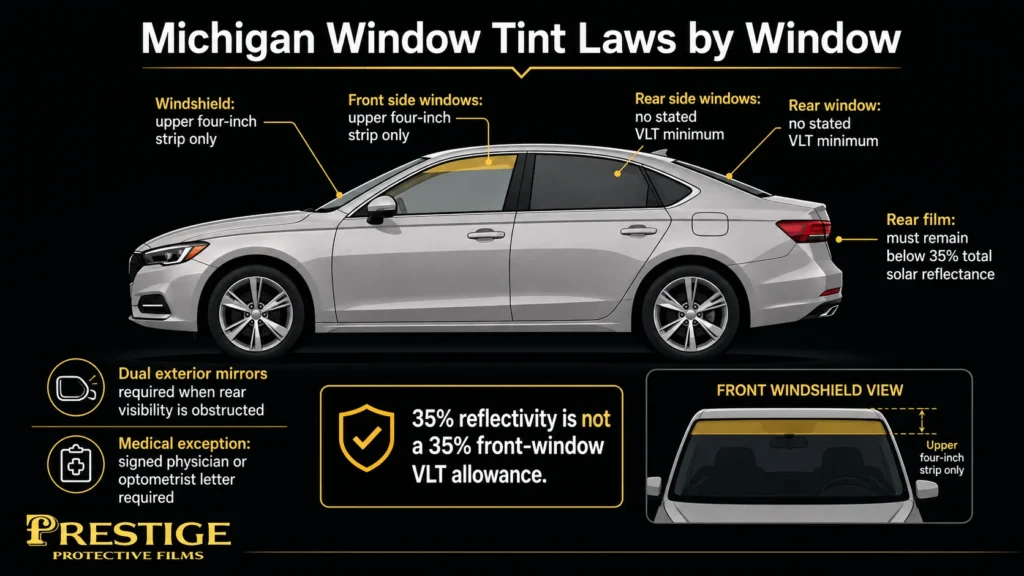
| Window Position | Standard Michigan Rule | Important Condition |
| Windshield | Tint along the top edge only | The strip cannot extend beyond the permitted four-inch or shade-band boundary |
| Front side windows | Tint along the top edge only | Film below the permitted upper strip is generally prohibited |
| Rear side windows | No stated VLT minimum | Film must comply with the rear reflectivity restriction |
| Rear window | No stated VLT minimum | Two outside mirrors are required when rear visibility becomes obstructed |
| Medical treatment | Broader treatment may qualify | A signed physician or optometrist letter must remain in the vehicle |
The statute also addresses reflective and nonreflective applications. A dark shade can be legal on rear glass yet unsafe for night driving. Legal permission and practical visibility are separate decisions.
Is 35% Tint Legal on Front Windows in Michigan?
Michigan does not establish a general 35% VLT limit for front side windows. The ordinary rule permits a tinted strip along their top edge. Film covering the lower viewing area is generally prohibited, even when its VLT rating is 35%, 50%, or 70%.
The confusion comes from a different measurement. Michigan uses 35% in a rear-glass reflectivity restriction, not as a front-window darkness allowance. Prestige Protective Films recommends separating these two measurements before selecting any film.
VLT measures how much visible light passes through glass and film. Reflectivity measures how much solar energy or visible light reflects away from the surface. A 35% VLT film and a film with 35% reflectivity describe different properties.
What Does Michigan’s Four-Inch Tint Rule Mean?
Michigan permits tinted film along the top edge of the windshield and the front side windows. The material cannot extend more than four inches from the top. It also cannot extend lower than the factory shade band when that boundary sits closer to the top.
This means a full windshield application isn’t automatically legal just because the film looks clear. Section 257.709 covers reflective and nonreflective windshield film. Drivers should not treat 70% or 80% film as a guaranteed legal full-windshield option.
The same caution applies to driver and front-passenger windows. The law focuses on the area covered, not just a meter reading. A light film below the upper strip can still conflict with the standard rule.
How Dark Can Rear Windows Be in Michigan?
Michigan does not state a minimum VLT for rear side windows or the rear window. Nonreflective smoked glass and film are permitted behind the driver. This allows dark rear shades, including 20% or 5%, as long as you meet other legal requirements.
Rear visibility still matters. A vehicle needs two outside rearview mirrors when a rear-window treatment obstructs the driver’s view behind the vehicle. Those mirrors must provide a clear view of the highway.
Very dark rear film can reduce visibility on unlit Oakland County roads. Prestige Protective Films considers nighttime driving, backup cameras, cabin lighting, and mirror use when discussing rear shades. The darkest available option is not always the safest choice.
Are Tint Laws Different for Cars, SUVs, Trucks, and Vans?
Section 257.709 does not provide separate VLT charts for sedans and multipurpose vehicles. The same front-glass placement rule generally applies to cars, SUVs, pickups, and vans. Rear glass receives the same nonreflective-film exception.
Vehicle design can still change the practical result. A large SUV may have factory privacy glass behind the driver. Adding film can make those windows much darker than the film label suggests.
Drivers should identify each pane by position before choosing a shade. A rear door window sits behind the driver. A front door window remains immediately adjacent to the driver or front passenger.
What Does Michigan’s 35% Reflectivity Rule Mean?
The statute prohibits a rear window or rear side window treatment that creates total solar reflectance of 35% or more. It specifically includes silver or gold reflective film. This restriction concerns mirror-like reflection, not darkness.
Most legal questions focus on VLT because shade percentages appear on film samples. Michigan’s law requires a second conversation about reflectance. A low VLT shade can remain nonreflective, while a lighter metallic appearance may reflect more energy.
Film specifications should identify visible appearance and solar performance separately. Product names such as ceramic, dyed, or metallic do not establish legal compliance on their own.
How Does a Michigan Medical Tint Exception Work?
Michigan allows special window treatment when a physician or optometrist considers it medically necessary. The protection must apply to someone who is light sensitive or photosensitive. The vehicle’s owner or operator must possess a signed letter from that medical professional.
The statute does not describe a routine application to the Michigan Secretary of State. It focuses on carrying the signed medical-necessity letter. Michigan State Police also says another person may drive the vehicle as long as the required letter remains available.
A medical exception does not permit an obstructed driving view. The treatment cannot interfere with a clear view of the highway or an intersecting road. Drivers should confirm the required documentation before installation and keep the original information current.
Do Michigan Tint Laws Apply to Out-of-State Vehicles?
Section 257.709 lists an exception for vehicles registered in another state, territory, United States commonwealth, country, or province. That language matters to visitors and new Michigan residents. A vehicle does not receive this exception after Michigan registration replaces its former registration.
Document registration status during interstate travel. Drivers must also follow rules in every jurisdiction they enter. A Michigan-compliant rear shade does not automatically comply with Ohio, Indiana, or another destination’s law.
New residents should review film before changing registration. Removing noncompliant front film before registration can prevent avoidable problems later.
What Happens After an Illegal Window Tint Violation?
A violation of Section 257.709 is a civil infraction. The statute does not publish the simple first-offense and repeat-offense price table found on many tint websites. Total costs can depend on the citation, court assessments, location, and required corrective work.
An illegal installation can also create removal and replacement expenses. Rear-window removal requires care around defroster lines and antennas. Front-film removal may involve adhesive cleanup before the glass returns to a clear condition.
Drivers receiving a citation should read the document and follow its response instructions. A local court or qualified attorney can explain deadlines and legal options. A tint installer should not present informal enforcement experience as legal advice.
How Do VLT, Factory Glass, and Film Ratings Work Together?
VLT means visible light transmission. A 70% reading allows more visible light through than a 20% reading. Lower numbers look darker, but film packaging doesn’t always match the finished window.
Factory glass already transmits less than 100% of visible light. Aftermarket film reduces that transmission again. For example, 80% glass paired with 50% film may produce about 40% combined VLT under idealized multiplication.
A tint meter measures the finished glass-and-film system. That measurement helps compare rear shades and document final appearance. It cannot make lower front-window coverage legal when Michigan’s rule prohibits film in that position.
How Can Michigan Drivers Choose a Compliant Window Film?
Start with legal coverage, then select performance and shade. Rear windows provide room to balance privacy, glare control, heat rejection, and night visibility. Front glass requires much stricter placement under the standard rule.
Film technology can reduce heat without requiring the darkest shade. Drivers comparing ceramic window tint options can review infrared performance, optical clarity, warranty coverage and signal compatibility. Product data matters more than a broad material label.
Ask the installer to identify every covered window in writing. The quote should also name the film series, shade, warranty, and planned edge position. Review medical documentation before starting special front-glass treatment.
How Should Drivers Check Michigan Tint Laws Before Installation?
Review the official Michigan State Police guidance on tinted windows before approving a window film plan. The relevant information appears under the Vehicle Equipment section. Michigan State Police traffic-law guidance can help explain how officers interpret the statute. Official sources should take precedence when a blog, chart, or salesperson provides conflicting information.
Confirm four items during the review: covered window position, top-strip depth, rear reflectivity and mirror visibility. A medical case also requires the signed letter described by law. These checks address the rules that generic VLT charts often miss.
Laws and enforcement practices can change. Current written sources provide stronger guidance than photographs of other vehicles or informal reports about past traffic stops.
Conclusion
Michigan does not use a standard 35% VLT allowance for ordinary front side window coverage. Front film is generally limited to the upper strip. Rear windows have no stated darkness minimum, but reflectivity and rear visibility rules remain important.
Prestige Protective Films helps Waterford and Oakland County drivers compare legal coverage with comfort and visibility needs. Drivers can also compare common window tint percentages before choosing a rear shade or permitted upper strip.
Frequently Asked Questions
Is 35% tint legal on the front driver and passenger windows in Michigan?
Michigan does not provide a general 35% VLT allowance for the full front side windows. Standard aftermarket film is limited to the permitted upper strip. The 35% figure in Section 257.709 concerns rear-glass reflectivity, not front-window darkness. Film below that strip is barred.
Can the entire windshield have clear ceramic film in Michigan?
The standard rule doesn’t make full-windshield film legal just because it looks clear. Michigan restricts reflective and nonreflective windshield applications, except for the permitted upper strip. A medical exception requires specific documentation. Check the current law.
Is 5% limo tint legal on rear windows in Michigan?
Michigan states no minimum VLT for nonreflective rear side windows or rear-window film. Thus, 5% can be permitted behind the driver. Rear reflectivity must remain lawful, and two outside mirrors are required when the rear-window treatment blocks rearward visibility. Night visibility still matters.
What paperwork is required for a medical window tint exception in Michigan?
The owner or operator must possess a letter signed by a physician or optometrist. It must state that special window treatment is medically necessary for someone who is light sensitive or photosensitive. The treatment still cannot obstruct the driver’s clear view of the road. Keep it inside the vehicle.
Can a Michigan police officer issue a ticket for illegal window tint?
Yes. A violation of Michigan Vehicle Code Section 257.709 is a civil infraction. The statute does not provide one universal fine table for every case. Citation costs and correction requirements can vary, so drivers should follow the court’s instructions. Exact costs can differ locally.
Are Michigan window tint laws different for sedans, SUVs, trucks, and vans?
Michigan’s statute does not establish separate darkness charts for these vehicle classes. The front top-strip rule and rear nonreflective-film exception generally apply by window position. Factory privacy glass can change the finished shade and nighttime visibility. Position controls the rule.