

Fresh tint looks great, then the first dusty commute hits. The question comes up fast: can you wash your car after window tint? The short answer is yes, but the exterior body, exterior glass, and interior glass each follow a different timeline. Prestige Protective Films’ certified window tinting team in Waterford Township fields this question daily. This guide breaks down exactly when each surface is safe to clean.
Key Takeaways
- Exterior body and paint: Safe to wash immediately. Tint film is applied to the interior glass, not the body.
- Exterior glass: A water-only rinse is fine after 1 to 2 days. Wait 3 to 5 days before soap or pressure washing.
- Interior glass: Wait 5 to 7 days before cleaning with any product. Dust with a dry cloth only until then.
- Rolling windows down: Wait at least 48 hours, and preferably 3 to 5 days. Stretch that to a full week in cold Michigan weather.
- Windshield wipers: Safe to use right away. Keep use light for the first 24 to 48 hours.
- Automatic car washes: Skip brush-style tunnel washes for a week. Touchless washes are a reasonable option after 48 hours.
- Cleaning products: Use a pH-neutral, ammonia-free glass cleaner and a microfiber towel once the curing period ends.
How Long Does Window Tint Take To Cure?
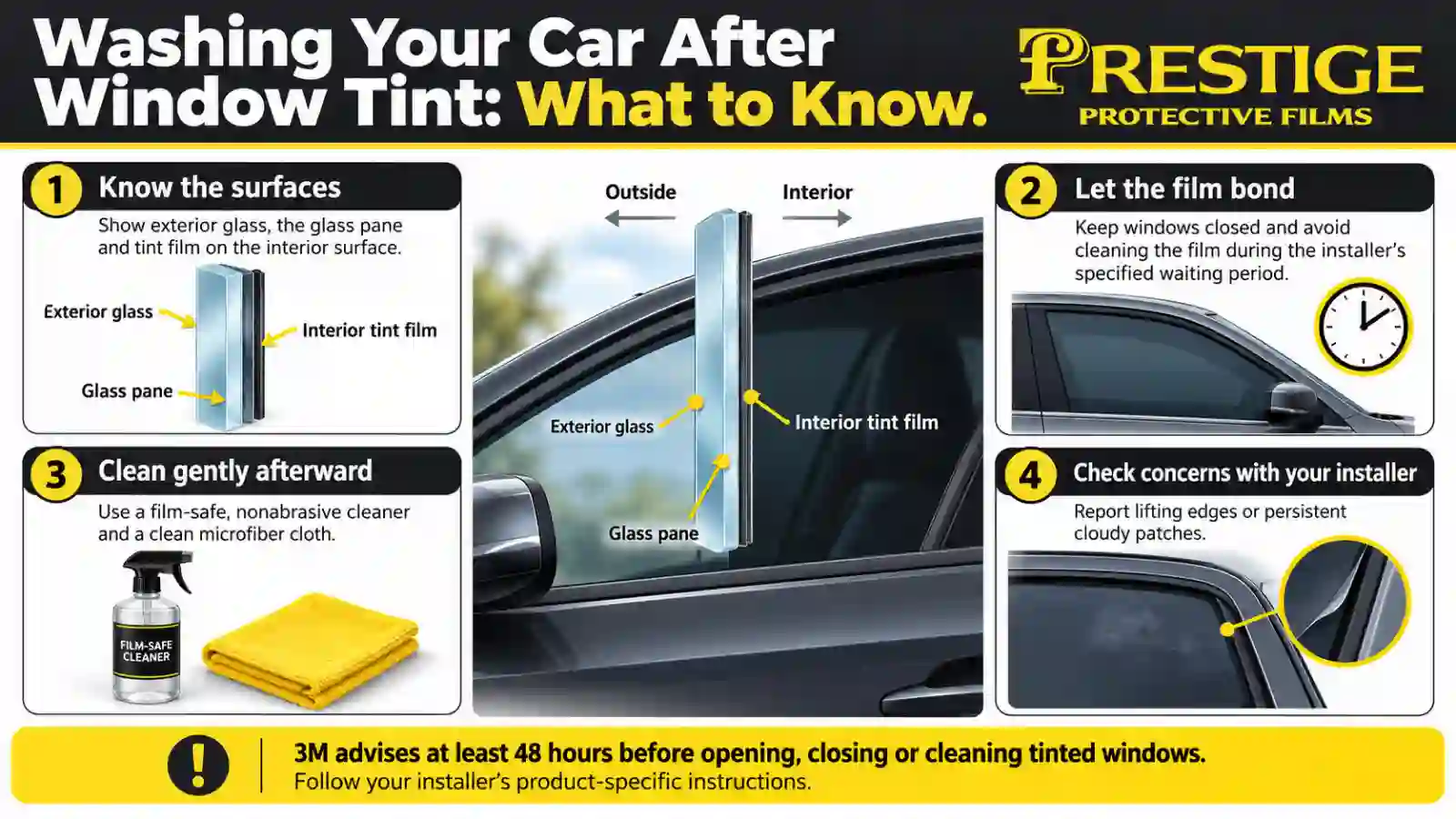
Window tint feels dry within an hour or two, but that only means the surface moisture has evaporated. The adhesive underneath needs far longer to fully bond with the glass. Most professional-grade film reaches a full cure in 2 to 7 days, per how long window tint actually takes to dry. That timeline depends on the film type and the weather at install.
Why the Adhesive Needs Time to Bond
Installers use a mounting solution to slide the film into position before it sets. That solution has to work its way out from under the film first. Only then does the pressure-sensitive adhesive lock fully in place. Disturbing the glass with water, pressure, or motion too early can shift the film. It can also trap moisture underneath, leaving a visible haze.
Small water pockets or tiny bubbles right after install are normal. They usually clear on their own within a few days. That trapped moisture is part of the curing process, not a sign of a bad install. It is only a concern if the pockets grow instead of shrinking.
How Michigan Weather Changes the Cure Time
Waterford Township summers speed curing along, since heat helps the mounting solution evaporate faster. Michigan winters slow it down considerably, and damp air can stretch a full cure toward 7 days. A car tinted in December or January should plan around the longer end of that range.
Glass temperature matters as much as air temperature. A cold garage or an overnight frost can trap moisture longer. The same install would cure faster on a warm afternoon.
Can You Wash the Outside of Your Car Right After Tint?
Yes, in most cases. Window film is installed on the inside surface of the glass. That means it has no contact with exterior dirt, road salt, or wax. The exterior body panels can be washed the same day as installation without any risk to the tint itself.
Washing the Exterior Paint and Body
A gentle hand wash or a soft-cloth touchless wash is fine for the paint, hood, and bumpers right away. Skip anything that involves scrubbing near the window edges during the first few days. Water forced under the film’s edge is the actual risk, not the exterior wash itself.
Michigan winters bring road salt and slush that build up fast on paint and lower panels. Rinsing that off promptly protects the paint without putting the tint at risk. Salt left sitting on paint for weeks causes far more long-term damage than an early wash ever could.
Rinsing the Outside of the Tinted Windows Safely
The outside surface of a tinted window can usually be rinsed with plain water within a day or two. That is safe because the film sits on the inside of the glass, not the outside. Waiting 3 to 5 days before soap, pressure washing, or scrubbing directly on the glass is still the safer call. That gap keeps water and chemicals from creeping around the window’s edge seals while the adhesive is still setting.
A soft cloth and a light hose stream handle most exterior grime without added risk during that window.
When Can You Clean the Inside of Tinted Windows?
Interior glass needs the most patience of any surface on the car. Cleaning products, damp cloths, and even stray moisture can interrupt curing if they land on the film too early. Most installers recommend waiting a full 5 to 7 days before touching interior tinted glass with anything but a dry cloth.
Ceramic film often needs slightly longer than standard dyed tint, thanks to its thicker, multi-layer construction. Anyone comparing ceramic tint versus standard dyed film should expect a few extra days before cleaning the interior normally. Nano-ceramic particles add heat rejection, but that extra material also means more mounting solution needs to escape first.
A dry microfiber towel is fine for dusting interior glass at any point during curing, since it adds no moisture. Save liquid cleaners and any real wiping pressure for after the curing window closes completely.
How Long Should You Wait Before Rolling the Windows Down?
Keep the windows up for at least 48 hours after installation, and preferably 3 to 5 days. Rolling a window down too soon drags the still-soft film across the rubber seal and into the door. That friction is one of the most common causes of lifted edges and creased film during the first week.
If a window absolutely must move before the cure finishes, lower it no more than an inch. Raise it back up immediately afterward. That small adjustment causes far less damage than a full roll-down. Waiting out the full week removes the risk entirely. That is the safer call during a Michigan cold snap, when curing already runs slower.
Passengers and drivers reaching for the window switch out of habit cause most accidental early roll-downs. A simple reminder note on the dash for the first week solves that problem.
Is It Safe To Use Windshield Wipers After Tint?
Yes, windshield wipers are safe to use right away under normal conditions. Wiper blades ride on the exterior surface of the glass, while window film adheres to the interior. The two surfaces never actually touch. Michigan law only allows a thin tint strip along the top of the windshield anyway. That keeps the entire wiper path clear of film.
The one exception is heavy wiper use during the first 24 to 48 hours. This matters most on a freshly tinted rear window with its own wiper. Repeated washer fluid spray and rapid wiping push extra moisture toward the glass edges while the adhesive is still setting. Light, occasional wiper use during a passing rain is fine from day one.
What Cleaning Products Are Safe For Freshly Tinted Windows?
Once the curing period ends, cleaning tinted glass safely comes down to two things. Use a pH-neutral formula and a soft applicator, and most situations are covered. A mild, ammonia-free glass cleaner paired with a clean microfiber towel handles almost everything a driver runs into.
Why Ammonia-Based Cleaners Damage Tint
Ammonia breaks down the adhesive and dye layers in window film over time, even on tint that has fully cured. Regular use leads to hazing, bubbling, and premature fading long after installation, not just during the first week. Many popular blue glass cleaner formulas contain ammonia compounds. Checking the label before spraying anything on tinted glass is worth the extra few seconds.
Homemade cleaning mixes built around vinegar or household ammonia carry the same risk as store-bought formulas. Sticking with a product labeled safe for tinted windows removes the guesswork entirely.
Tools That Won’t Scratch the Film
Skip paper towels, rough sponges, and stiff-bristle brushes on any tinted surface. Spray cleaner onto the cloth first, rather than directly onto the glass. That limits how much liquid can reach the window’s edge. Prestige Protective Films’ technicians are certified through XPEL, 3M, Avery Dennison, and KPMF. The shop is backed by more than 140 five-star reviews across Oakland County. Its technicians see more warranty claims tied to harsh chemicals and scratchy towels than to any other habit.
Adhesive residue from stickers, parking permits, or window clings can also strip tint if peeled off carelessly. Warming the area first and pulling slowly reduces that risk considerably.
Can You Use an Automatic Car Wash After Getting Your Windows Tinted?
Hold off on tunnel car washes with spinning brushes for at least a week after installation. Those brushes apply direct pressure right where film meets rubber trim, the weakest spot during curing. A brush catching a still-soft edge can peel back several inches of film in seconds.
Touchless or soft-cloth automatic washes are a safer middle ground once 48 hours have passed. They still involve real water pressure, so waiting the full week keeps risk to a minimum. Hand washing remains the safest option for the first week, regardless of which automatic system a driver prefers.
Underbody and wheel-well sprayers used in most automated tunnel washes pose no risk to window film. They never reach the glass at all. The brushes and high-pressure top jets are the parts worth avoiding early on.
Many tunnel washes also offer add-on wax or sealant sprays built for painted surfaces, not fresh window film. Skipping those extras for the first week is a reasonable precaution, even on a touchless setting.
How To Wash a Car Safely Once the Tint Has Cured
After the curing period passes, tinted windows can be cleaned the same way as any other glass on the car. A short, repeatable routine keeps film looking clear without shortening its lifespan.
- Rinse loose dirt off the glass with plain water before applying any product.
- Spray an ammonia-free glass cleaner onto a microfiber cloth, not directly onto the window.
- Wipe in straight lines rather than circles to avoid streaking.
- Dry immediately with a second clean microfiber towel to prevent water spots.
- Check window edges for lifting or bubbling while cleaning, since early signs are easiest to fix.
Following this same routine every two to four weeks keeps tint clear. It also extends the useful life of the film considerably.
Window Tint Curing Timeline At a Glance
| Surface or Action | Safe Wait Time | Why |
| Exterior body and paint | Immediately | Film is not applied to painted surfaces |
| Exterior glass, water rinse only | 1 to 2 days | Reduces moisture pressure near window edges |
| Exterior glass, soap or pressure wash | 3 to 5 days | Prevents chemicals and force reaching the film edge |
| Interior glass cleaning | 5 to 7 days | Film needs full, undisturbed contact with glass to bond |
| Rolling windows down | 3 to 5 days (7 in cold weather) | Prevents seal friction on soft film |
| Windshield and rear wipers | Immediately, light use only for 48 hours | Wipers contact the exterior, not the tinted film |
| Automatic brush car wash | 7 days | Brushes apply direct pressure at film edges |
| Touchless automatic wash | 48 hours or later | Lower direct contact with window edges |
Michigan winters push every wait time in this table toward the longer end. Cold, humid air noticeably slows the adhesive curing process. A car tinted in January should treat these numbers as a floor, not a target.
How To Keep Window Tint Looking Great For Years
Long-term care matters as much as the first week does. Parking in shade when possible reduces UV stress on the film and on the interior trim underneath it. A defroster is safe to use once the film has fully cured. During the first few days after install, avoid blasting it directly at the glass.
Ice scrapers and other sharp objects are the fastest way to cut or lift tint. Michigan winters make that mistake especially common. A can of de-icer spray and a soft brush clear frost without touching the film directly. Following 3M’s official window film care guidelines after curing protects a manufacturer or shop warranty long after the install date.
Regular gentle washing and ammonia-free products do more for tint longevity than any single product on the shelf. A little patience during that first week matters just as much.
Recognizing Early Signs of a Problem
A few small bubbles or a light haze in the first several days is normal. They typically clear as the curing process finishes. Bubbles that keep growing, cloudy patches that spread, or a visibly lifting edge are worth a second look.
Catching those signs early usually means a simple fix rather than a full film replacement. More washing or window use only makes the problem worse. A quick photo and a call to the original installer is the fastest way to get a clear answer.
Can You Wash Your Car After Window Tint? Here’s the Bottom Line
You can wash the exterior body the same day as installation. The exterior glass needs a few days of caution. The interior glass needs closer to a full week before you can resume normal cleaning. Windshield wipers are safe to use from day one. Automatic brush washes and rolled-down windows deserve the most patience of all.
Getting this window of time right protects a tint investment for years, not just the first week. Prestige Protective Films backs every installation with a warranty, and proper aftercare keeps that coverage intact. Drivers curious how long ceramic window tint really lasts should start here. That timeline begins with these first few days after install.
Frequently Asked Questions
Can I wash my car 2 days after getting my windows tinted?
Yes, in most cases. The exterior body is fine to wash by day two. A plain water rinse on the glass is usually safe by then, too. Skip soap and pressure washing for now. Wait to clean the interior glass until day five, especially in cooler Michigan weather and during the long winter months.
Is it safe to wash the outside of my car right after window tint?
Yes. Window film sits on the interior side of the glass. The exterior paint, body, and outer glass surface have no direct contact with the film. A gentle wash is fine right away, any day of the week. Soap and pressure washing directly on the windows should still wait three to five days.
Can I use windshield wipers after getting my windows tinted?
Yes. Wiper blades run along the outside of the glass, while window film sits safely on the inside. The two surfaces never touch. Use wipers lightly for the first 48 hours. Skip heavy washer fluid spray while the adhesive underneath is still curing.
How long after tinting can I roll my car windows down?
Wait at least 48 hours before rolling windows down after a fresh tint job. Three to five days is the safer target for most film types installed on cars today. Rolling too soon drags the still-soft film against the door seal and trim. In colder months, stretch that wait to a full week.
What happens if I wash my car too soon after window tint?
Washing too soon can force water or cleaner underneath the film’s edge before the adhesive fully bonds to the glass. That often shows up within days as cloudy patches or trapped bubbles that keep growing. Another common warning sign is a corner that visibly lifts away from the window.
Can I go through an automatic car wash after getting my windows tinted?
Skip brush-style tunnel washes for at least a week. The spinning brushes press directly on the most vulnerable window edges near the trim. A touchless or soft-cloth wash is a reasonable middle ground after the first 48 hours. Hand washing still stays the safest option overall.