
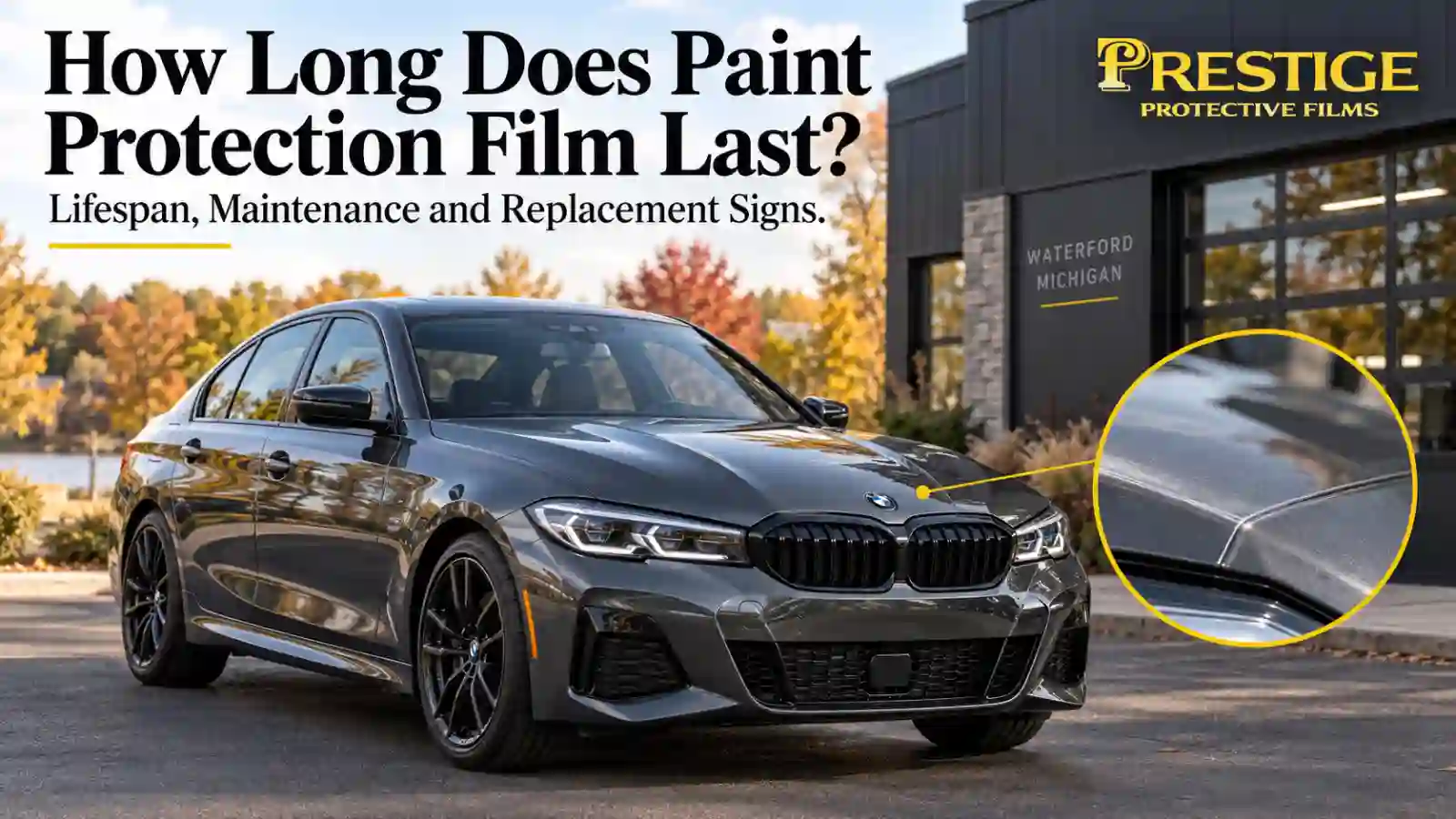
How long does paint protection film last? Most quality PPF holds up 5 to 10 years, and Prestige Protective Films installs it across Waterford Township every week. The honest answer depends on film grade, installer skill, and Michigan’s tough winters, not a generic brochure number.
Key Takeaway:
- Paint protection film lasts 5 to 10 years on average.
- Premium TPU film can reach the full 10-year warranty term with proper care.
- XPEL, 3M, and SunTek all back premium film with 7- to 10-year manufacturer warranties.
- Film quality, installer skill, and Michigan’s road salt are the biggest factors in how long PPF actually lasts here.
- Budget PVC film can start failing in as little as 2 to 4 years.
- Yellowing, edge lifting, and a loss of self-healing are the clearest signs PPF needs replacing.
- Ceramic coating over PPF can extend its usable life by shedding salt and grime before they reach the film.
What Is Paint Protection Film and How Does It Work
Paint protection film Waterform, MI is a clear, self-healing layer applied over factory paint. It absorbs rock chips, road grit, and minor scratches before they reach the clear coat. It has become the standard first upgrade for new vehicle owners across Oakland County.
Coverage Options: Partial vs Full Vehicle PPF
Coverage comes in tiers. A partial front package covers the bumper, hood edge, and mirrors, while full coverage protects more panels. Highway drivers often choose partial coverage, while gravel-route commuters tend to choose full-vehicle packages.
TPU vs PVC: What PPF Is Made From
Most modern PPF uses thermoplastic polyurethane, or TPU, with a topcoat that resists stains and UV yellowing. Premium brands like XPEL and 3M lead this tier, while Avery Dennison and KPMF offer strong mid-to-premium alternatives. Older or budget film still uses PVC, a stiffer plastic that cracks and yellows faster in direct sun.
Self-Healing Technology Explained
The self-healing layer is the real innovation behind modern film. Light swirl marks and fine scratches disappear once the film warms up, from sunlight or warm water. The elastomeric polymer simply reflows back into shape, with no buffing needed.
How Long Does Paint Protection Film Actually Last
Paint protection film lasts 5 to 10 years, with premium TPU film reaching the full 10-year mark many warranties cover. The 2026 PPF cost guide for Michigan vehicles breaks down pricing by package and film grade. Prestige Protective Films sets expectations against these same industry benchmarks at every consultation.
Premium Film Lifespan and Warranties
Warranty length is a useful lifespan benchmark, since manufacturers set these terms from real durability testing. XPEL backs its Ultimate Plus film with a 10-year limited warranty against peeling, cracking, yellowing, and bubbling. 3M’s Pro Series carries a similar term, and SunTek’s premium lines typically run 7 to 10 years.
Mid-Range and Budget Film Lifespan
Mid-range films from reputable brands often last 5 to 7 years before yellowing or edge lifting appears. Budget or PVC-based film is the outlier. It can start degrading in as little as 2 to 4 years, especially through Michigan’s hot summers and cold winters.
Colored and Matte Film Lifespan
Colored and matte PPF finishes behave differently than clear gloss film. Matte film has a textured topcoat that shows swirl marks more easily and self-heals a bit slower. Colored PPF pigments can also fade a year or two earlier than clear film under the same sun exposure.
What Determines How Long PPF Lasts
Film quality is only one part of the lifespan equation. Four other factors decide if PPF reaches its full potential. Getting all four right separates a 10-year film from a 3-year disappointment.
Installation Quality
A rushed or amateur install is the most common reason PPF fails early. Poor edge wrapping, trapped dirt, or overstretched panels all shorten lifespan, no matter how good the film is. Certified PPF installers near Drayton Plains and Oakland County follow manufacturer templates and heat-forming steps to prevent these problems.
Driving Habits and Road Conditions
Highway commuters and drivers on gravel or construction routes put more wear on film edges. Frequent exposure to salt brine and loose gravel accelerates chipping right at those leading edges. City stop-and-go driving, by comparison, is far gentler on film edges.
Maintenance Routine
Regular washing keeps contaminants from etching into the film surface. Skipping washes for months lets salt, bird droppings, and tree sap sit on the film longer, which speeds up staining. A quick rinse after a messy job, like an oil change, also helps.
Vehicle Storage
A vehicle parked outdoors year-round takes far more UV and weather exposure than one kept in a garage. Covered or indoor storage can add a year or two of usable film life on its own. Even a simple car cover helps on nights without garage access.
How Michigan Winters and Road Salt Affect PPF in Waterford Township
Southeast Michigan puts PPF through a harder test than warmer states see. Understanding how Waterford’s roads affect paint protection film explains why local care habits matter so much here. Prestige Protective Films sees this firsthand on vehicles commuting through Waterford, Pontiac, and Clarkston every winter.
Road salt is the biggest local threat to film longevity. Salt brine clings to the bumper and rocker panels, and sitting too long lets it work into film seams. Regular winter rinsing, including the undercarriage, limits that exposure.
Freeze-thaw cycles add a second stress point unique to this region. Film contracts in sub-zero cold and expands again once it warms up, and repeated cycling can loosen edge adhesive. Spring pothole season adds a third factor, since loose gravel from cracked roads hits front bumpers harder than in summer.
Signs Paint Protection Film Needs Replacing
Most PPF gives clear warning signs before it fails completely. Watching for these keeps a vehicle from driving around with film that has stopped doing its job.
Yellowing or a cloudy haze across large panels is the most obvious sign. It usually means the UV inhibitors in the film have broken down. Lifting or peeling at the edges, especially around mirrors and bumpers, signals adhesive failure rather than a simple cosmetic issue.
A film that no longer self-heals under warm water is another reliable marker. Once the elastomeric layer stops flexing back into shape, its protective lifespan is effectively over. An annual inspection, ideally before winter, catches these signs early enough for a normal reinstall instead of a rushed one.
How Much Does It Cost to Replace or Reinstall PPF
Reinstall cost depends on how much of the vehicle needs new film. It also depends on if the old film needs removal first. Partial front-end packages typically cost less than a full front or full vehicle reinstall, since both scale with coverage area.
Removing old, failing film before a reinstall adds labor time, especially if it has bonded tightly to the clear coat. This step alone can add an extra hour or more on a full front reinstall. A shop that inspects the vehicle first gives a far more accurate number than a blind phone quote.
Comparing reinstall cost against paint correction puts the number in perspective. A quality reinstall on a well-kept vehicle is almost always cheaper than paint correction after years of unprotected rock chips. Timing it around a lease return or resale pays off too, since fresh film reassures buyers the paint stayed protected.
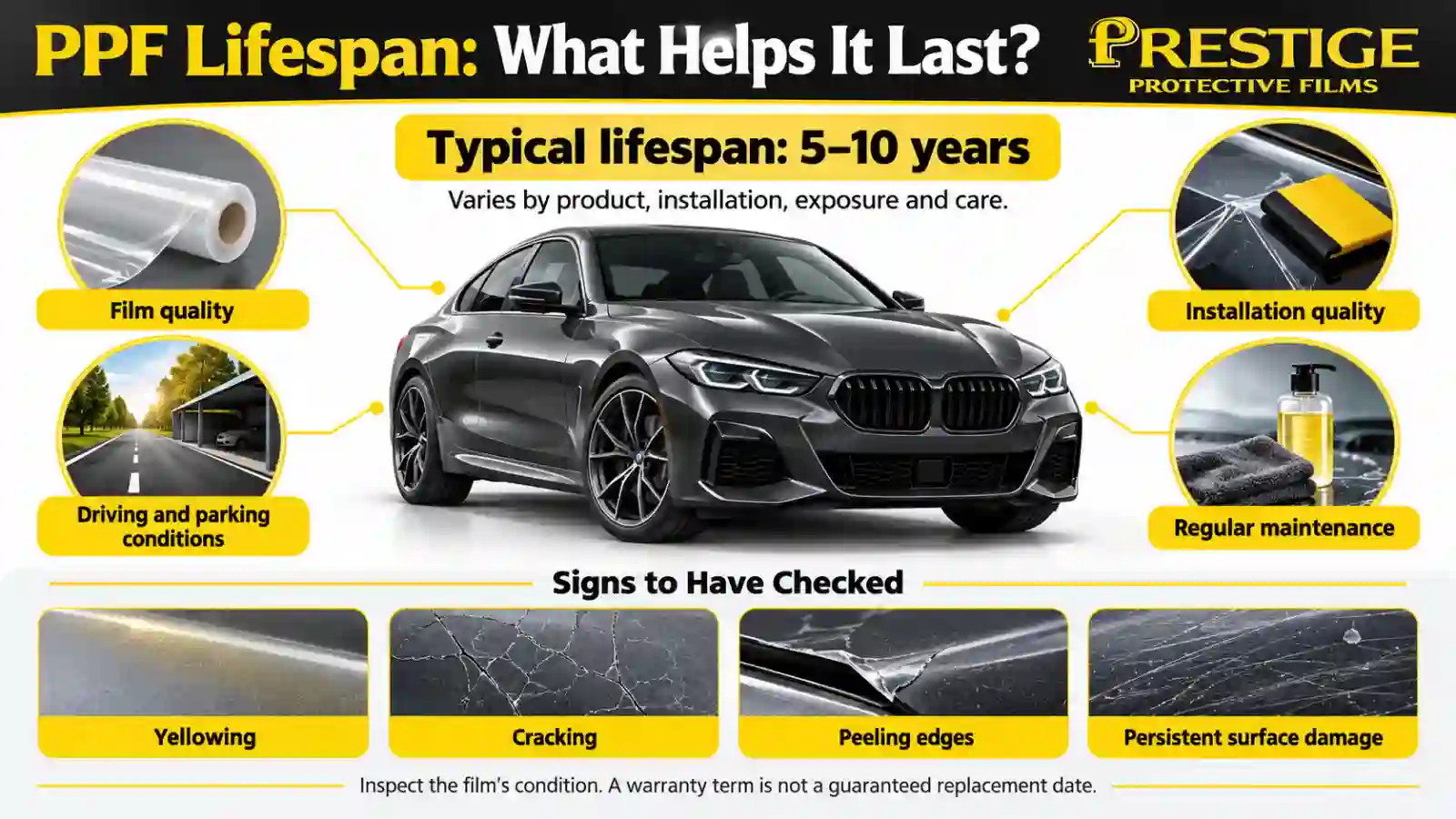
How to Extend the Life of Paint Protection Film
Small habits add years to PPF performance, and none of them require special equipment. These PPF maintenance tips for Waterford’s climate keep film performing at its best through all four Michigan seasons. Most of the routine takes less than twenty minutes a week.
Wash the vehicle every one to two weeks using a pH-neutral soap and a microfiber mitt. Harsh dish soap or stiff automatic car wash brushes strip the topcoat faster than normal driving does. Rinsing the lower panels after winter drives clears salt brine before it can sit and work into the seams.
Parking in shade or a garage limits daily UV exposure and slows yellowing considerably. A yearly inspection by a certified installer catches small lifting or edge issues while they are still a quick fix. Most certified shops offer this inspection as a quick walk-around check.
Does Ceramic Coating Make PPF Last Longer
Ceramic coating over PPF is one of the most reliable ways to add years to film life. The coating creates a hydrophobic top layer that sheds water, salt, and road grime before it reaches the film. It also adds a noticeable gloss boost that most vehicle owners want anyway.
This combination also cuts down on washing frequency and lowers the risk of swirl marks from repeated cleaning. Vehicle owners weighing the upfront cost can review the 2026 ceramic coating pricing guide to compare bundled pricing.
Ceramic coating will not repair film that is already lifting or yellowed. On fresh PPF, though, it meaningfully slows UV degradation and staining. Most certified installers recommend applying it within a few weeks of PPF installation for the strongest bond.
PPF vs Ceramic Coating vs Vinyl Wrap: Which Protection Lasts Longest
| Protection Type | Typical Lifespan | Impact Protection | Best For |
| Paint Protection Film (TPU) | 5 to 10 years | High, self-healing | Rock chips, scratches, road debris |
| Ceramic Coating | 2 to 5 years per application | Low | Water beading, chemical resistance, gloss |
| Vinyl Wrap | 3 to 7 years | Low to moderate | Color change, cosmetic customization |
PPF is the only one of the three built to absorb physical impact from gravel and road debris. Ceramic coating and vinyl wrap protect the surface chemically or cosmetically, but neither self-heals or stops a rock chip. Industry data from the International Window Film Association shows automotive film blocks up to 99 percent of UV rays.
Many Oakland County vehicle owners run PPF on impact-prone panels and layer ceramic coating over the rest of the car. That combination covers the physical and chemical sides of protection, without paying film prices on panels that rarely need it. This layered approach is common on trucks and SUVs that see rough gravel routes.
Final Thoughts on PPF Lifespan
Paint protection film lasts 5 to 10 years in most cases. Premium TPU film reaches the top of that range when it is installed correctly and maintained on a normal schedule. Film quality, installer skill, and Michigan’s road salt and freeze-thaw cycles all move that number up or down.
Vehicle owners who want the longest lifespan should use a certified installer, wash regularly, and add ceramic coating too. Prestige Protective Films pairs certified installation with the complete vehicle protection package in Waterford Township for full coverage.
Frequently Asked Questions
Why does paint protection film start yellowing after a few years in Michigan?
Yellowing happens when UV inhibitors inside cheaper film break down under repeated sun exposure and summer heat. Premium TPU film from brands like XPEL or 3M resists this for 7 to 10 years, while budget PVC film can yellow within 2 to 3 Michigan summers, especially when parked outdoors.
Does self-healing paint protection film actually work on deep scratches?
Self-healing works well on light swirl marks and fine scratches once warmed by sunlight or hot wash water. Deep scratches that cut through the topcoat will not heal on their own and usually require a certified installer to replace the panel section with matched film and adhesive.
Will road salt in Michigan ruin my paint protection film faster than in warmer states?
Road salt speeds up edge lifting if it sits on the film for weeks without rinsing during Michigan’s winter driving season. Regular washes, especially on the front bumper, rocker panels, and wheel arches, keep salt brine from cutting into the film’s normal 5 to 10 year lifespan and voiding coverage.
Is it worth adding ceramic coating on top of PPF to make it last longer?
Yes, ceramic coating adds a hydrophobic layer that sheds road salt, grime, and water spots before they reach the film surface below. It cannot fix existing damage, but on fresh PPF it slows UV yellowing and reduces wash-related wear over several years of Michigan driving.
What voids a paint protection film warranty?
Most manufacturer warranties exclude damage from DIY removal attempts, harsh chemical cleaners, abrasive brushes, or installation by an uncertified shop that skips proper templating and heat forming. Reading the written warranty terms before an install prevents surprises if a claim comes up later.
How do I know if my PPF needs a full reinstall instead of just a cleaning?
A cleaning will not fix film that has lost its self-healing ability, shows cloudy haze across large panels, or is lifting at multiple edges at once. A certified inspection can quickly confirm whether a targeted panel reinstall or a full vehicle reinstall is the more cost-effective option.