
Does window tinting make it harder to see at night? For most drivers, no, not when the film is installed correctly and matched to the right VLT percentage. Window tinting impacts nighttime driving visibility in measurable ways.
The effect comes down to tint darkness and film quality, not tinting itself. Prestige Protective Films answers this question daily for Waterford Township drivers who want privacy and heat control. Many also want a professional window tinting in Waterford job that keeps Dixie Highway clear after dark.
Key Takeaways
- Window tint does not automatically hurt night vision. The outcome depends on VLT percentage and film quality, not whether you tint at all.
- Most Michigan drivers who log real night miles do best with 35 to 50 percent VLT up front.
- Ceramic film scatters far less light than dyed film at the same VLT, cutting haze and starburst around headlights.
- Michigan sets no VLT minimum for side or rear windows. Only the windshield and front side windows are limited to a non-reflective top-four-inch strip, with reflectance under 35 percent.
- Window tint softens glare passing through glass but cannot fix smoked tail lights, misaimed headlights, or another driver’s high beams.
- Rain, snow, and fog further reduce visibility. Drivers logging heavy miles in Michigan’s darker months should lean toward a lighter front VLT.
What Happens to a Driver’s Eyes at Night With Tinted Windows
Human eyes rely on two types of light receptors: cones and rods. Cones handle color and daytime detail.
Rods take over in low light, a shift called mesopic vision. Rods detect motion and shape but register very little color or fine detail.
Tinted glass removes some of the light rods depend on. A clear windshield already lets in less light after dark than open air outside a vehicle. Adding film reduces the light reaching the retina by whatever percentage that film blocks.
This is why VLT percentage matters more at night than during the day. A film that looks fine at noon can make your eyes work harder once headlights become the main light source.
Why Glare Recovery Takes Longer After Dark
In low light, a driver’s pupils widen to gather more available light. That same widening makes a sudden bright headlight far more disruptive at night than during the day. Eyes need several seconds to recover full clarity after a bright light source passes.
Anything that reduces incoming light, including quality tint, can soften that spike and shorten recovery time. Cheap film with heavy light scatter does the opposite, spreading glare across the glass instead of controlling it.
Contrast Sensitivity and Age Play a Role Too
Contrast sensitivity, the ability to pick a dark object out of a dark background, declines gradually starting around age 40. That decline makes unlit hazards harder to spot regardless of tint. Drivers in this group generally benefit from staying on the lighter end of any VLT range they are considering.
A teenager and a 60-year-old will not experience the same tint the same way after dark. Film choice should account for the driver’s own night vision, not just personal style preference.
How Window Tint Percentage Changes Visibility After Dark
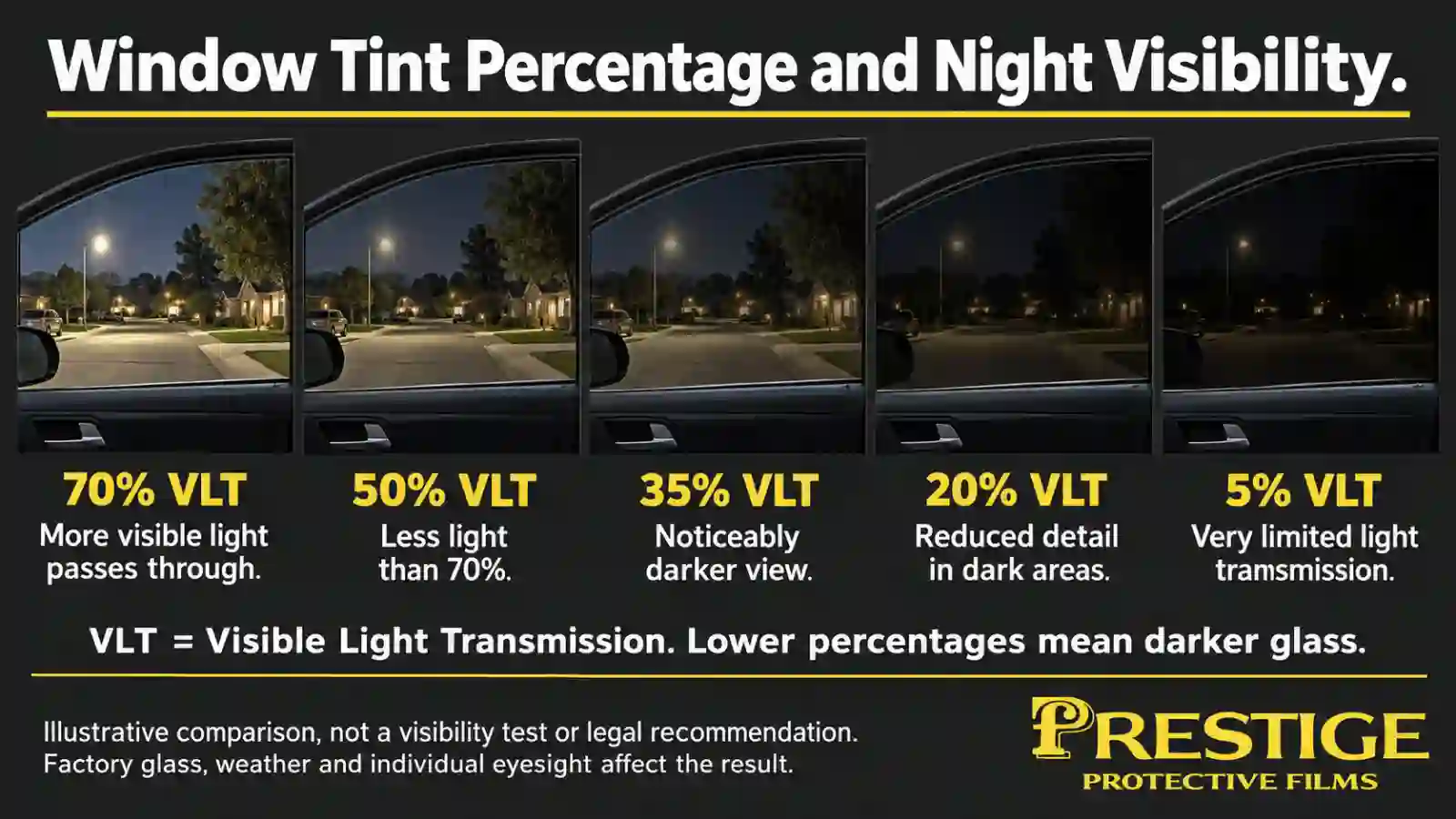
VLT stands for visible light transmission, the percentage of outside light a film lets through. A 5% VLT film blocks 95% of light.
A 70% VLT film blocks only 30%. Lower numbers always mean less light reaching a driver’s eyes after dark.
The table below breaks down how common VLT percentages behave once the sun goes down. It matches the detailed tint percentage breakdown built for Michigan drivers.
| VLT Percentage | Common Name | Night Visibility Impact |
| 70% to 90% | Light or factory-level tint | Minimal impact, close to no tint at all |
| 50% | Medium-light tint | Slight dimming, still clear for most drivers |
| 35% | Popular aftermarket shade | Noticeable dimming, manageable on lit roads |
| 20% to 25% | Dark tint | Real reduction in low-light detail and peripheral vision |
| 15% | Very dark tint | Difficult on unlit rural roads |
| 5% | Limo tint | Significant visibility loss after dark |
Windshield Tint and Night Glare
Michigan law limits aftermarket windshield film to a strip along the top four inches. Windshield VLT rarely becomes a night-driving issue for legally installed tint because of this limit.
Drivers asking about 20% or 35% windshield tint at night are usually thinking of that top strip. That strip sits above the sightline and does not affect the driver’s forward view.
Rear Window Tint at Night
Rear window darkness affects mirror visibility more than forward sightlines. A bright interior light against a dark rear window turns the mirror into a reflection of the cabin. Keeping interior lights off while driving solves most of this problem.
Ceramic vs Carbon vs Dyed Tint: Which Holds Up Best at Night
Not every film at the same VLT percentage performs the same way after dark. Film technology changes how much light scatters instead of transmitting cleanly through glass. Scatter is what causes haze and starburst around headlights.
Dyed film is the most affordable option but scatters more light at night, especially in cheaper grades. Carbon film improves on this with sharper clarity and no radio signal interference. Ceramic film goes further, using nano-ceramic particles instead of dye or metal for the most consistent night clarity.
A closer look at ceramic tint compared to regular film breaks down exactly where that clarity gap comes from.
Cheap dyed film also tends to develop haze or an orange tint with age, a sign of lower material quality. Installers call this defect orange peel. That aging haze scatters even more light at night than the film did when new.
Factory Tint vs Aftermarket Tint at Night
Factory-tinted glass comes lighter than most aftermarket film and keeps clarity high at night. Aftermarket tint varies widely, from clear ceramic film to very dark dyed film. Night performance depends on what gets installed, not the aftermarket label itself.
Prestige Protective Films fits ceramic and carbon film for Waterford drivers who want aftermarket privacy without factory-tint limits on darkness.
Michigan Window Tint Laws and What They Mean for Night Driving
Michigan’s tint law surprises many drivers. It sets no VLT minimum for side or rear windows.
State law only restricts the windshield and front side windows to a non-reflective strip along the top four inches. A reflectance cap under 35% applies to all film, front and rear alike.
That legal freedom does not mean every dark shade is a smart choice for night driving. A tint can pass inspection at 5% VLT. That same tint can still make it harder to spot a pedestrian on an unlit road outside Clarkston.
Michigan’s window tint laws lay out what is legal. Choosing what is safe for night driving is a separate decision drivers should make with an installer who understands both.
Drivers with a documented medical condition, such as lupus or another light sensitivity issue, can apply for a medical exemption. An approved exemption allows darker film on front side windows than the standard strip rule permits. The windshield limit still applies either way.
How Michigan Weather Changes Nighttime Tint Visibility
Rain, snow, and fog cut ambient light further on top of whatever a tint film already removes. A wet windshield at night scatters oncoming headlights into a wider halo. Darker tint gives that scattered light less room to resolve into a clear shape.
Michigan drivers face this combination often between October and March. Someone who drives mostly on well-lit Oakland County streets can usually tolerate more tint. A driver on unlit roads near White Lake or Commerce Township needs a lighter shade in poor weather.
Choosing a lighter VLT for the front windows keeps a safety margin during Michigan’s darker, wetter months. Drivers do not have to give up tint altogether to get that margin.
Best Tint Percentage for Night Driving in Waterford and Oakland County
Most Oakland County drivers who log real night miles do best with 35% to 50% VLT up front. That range cuts glare and heat during the day without leaving eyes straining once the sun sets.
Rear windows can go darker since they matter less for the primary sightline. A common setup among Waterford Township customers is 35% up front and 20% in back. That balance covers both privacy and visibility.
Prestige Protective Films has fitted this exact configuration on hundreds of vehicles across Waterford, Pontiac, and Commerce Township. The team adjusts the recommendation for drivers who commute through Auburn Hills or work night shifts near Clarkston.
Headlights, Tail Lights, and Glare: What Tint Fixes and What It Doesn’t
Window tint reduces glare that filters through glass, but it does not change the brightness of another car’s headlights. A closer look at how window tint cuts glare explains the mechanics in more depth. Quality film softens harsh light before it reaches the driver’s eyes.
Smoked tail lights and headlight covers are a different product entirely. They apply directly to the light housing, not the glass.
Smoking tail lights actually reduces how visible a vehicle is to drivers behind it. That lowers safety rather than improving it.
Reflective and Metallic Tint at Night
Metallic film adds a reflective layer that helps with daytime heat. That same layer can create a mirror-like glare of its own after dark.
Oncoming headlights sometimes bounce off metallic particles inside the film before reaching the eye. That adds a secondary glare source ceramic film does not produce.
Metallic tint can also interfere with radio, GPS, and cell signals. Most drivers do not notice until they lose reception on a night drive. Ceramic and dyed film avoid this problem entirely.
Anti-Glare Glass Coatings vs Window Tint
Anti-glare glass coatings are a separate product from tint film. These coatings sit on the outside of the glass and reduce reflected light rather than blocking transmitted light. Drivers searching for car glass coating for night driving are usually comparing this option against standard window film.
Tint and anti-glare coating solve different problems. The two can be combined on the same vehicle for the clearest night results.
Can Window Tint Adapt Between Day and Night Automatically
Photochromic and electrochromic films exist that lighten or darken based on available light, similar to transition lenses in eyeglasses. These self-adjusting window film technologies are still expensive and rare in the aftermarket automotive market compared to standard tint.
Most drivers asking about tint that changes from day to night are describing this emerging category. It is not yet a mainstream product at most shops, and cost remains a barrier to widespread installation. Static VLT film, chosen correctly for a specific driving pattern, remains the practical option for nearly every Michigan driver today.
That said, the underlying idea behind adaptive tint is matching darkness to actual light conditions. A proper VLT consultation already accomplishes that with film available right now. Picking 35% for a car driven mostly at night achieves a similar result to a film that lightens after dark.
Practical Tips for Driving Safely With Tinted Windows at Night
A few habits make any legal tint percentage safer after dark. None of these require new equipment, just consistent maintenance and a little awareness. Most take less than a minute and pay off every time the sun goes down.
Small Habits That Improve Night Visibility With Tint
- Clean interior and exterior glass weekly. Road film and dust scatter light more than clean glass does.
- Keep the rearview mirror in night mode to cut glare from headlights behind a tinted rear window.
- Avoid stacking dark sunglasses on top of dark tint after sunset. Both together cut too much available light.
- Get headlight aim checked yearly. Misaligned headlights make glare worse for everyone on the road, not just one driver.
- Replace wiper blades before they streak. Streaks scatter oncoming light across tinted glass and reduce clarity.
Tint Percentage vs Night Visibility: Quick Reference Table
The table below condenses the most common questions about tint darkness and night visibility into one quick reference.
| Driving Pattern | Recommended Front VLT | Recommended Rear VLT | Night Visibility Notes |
| Daily commuter, some night driving | 35% to 50% | 20% to 35% | Balanced glare control and clarity |
| Frequent rural or unlit road driving | 50% or higher | 35% or higher | Prioritizes light transmission over darkness |
| Mostly daytime, occasional night trips | 35% | 20% | Standard aftermarket balance |
| Rideshare or livery vehicle | 50% or higher front | Any legal shade rear | Passenger privacy and driver clarity both matter |
Glare and low-light visibility are not just a tinting question. Headlight performance plays just as large a role. The Insurance Institute for Highway Safety found that well-rated headlights cut nighttime crashes noticeably compared with poor-rated systems.
Choosing the right tint percentage solves half the equation. Well-aimed, well-rated headlights solve the other half.
Conclusion
Window tinting does not have to work against a driver’s night vision. The real variables are VLT percentage and film quality. What matters most is matching the tint to how and where a vehicle gets driven after dark.
Prestige Protective Films helps Waterford Township drivers choose the right shade for local roads. That includes I-75 at midnight and unlit stretches near Lake Angelus. Anyone weighing cost can check the full cost breakdown for tinting a vehicle in Michigan before booking an appointment.
Frequently Asked Questions
Does window tinting really make it harder to see out of a car at night?
Not with quality film at the correct VLT. Properly installed 35 to 50 percent tint keeps night visibility close to normal, while cheap dyed film below 20 percent noticeably dims low-light detail, peripheral vision, and depth perception on unlit rural roads near Waterford, especially in rain.
What is the best window tint percentage for driving at night?
Most night drivers do best with 35 to 50 percent VLT on the front side windows. This range cuts daytime glare and heat while keeping enough light transmission for clear vision once headlights and streetlights become the main light source after sunset across Michigan roads and highways.
Can a driver still see clearly through 20 percent tint at night?
Yes, but with some tradeoff. Twenty percent VLT noticeably dims low-light detail compared to 35 percent or higher, so drivers on unlit rural roads around Oakland County often notice reduced peripheral vision and slower detail recognition once darkness falls completely each evening in winter.
Does tinting a windshield make oncoming headlights worse at night?
No. Michigan only allows windshield film on the top four inches, above the driver’s sightline, so it does not affect forward visibility at all. Properly tinted front side windows actually soften glare from oncoming headlights rather than making it worse during late-night driving.
Is ceramic tint easier to see through at night than regular film?
Yes. Ceramic film scatters far less light than dyed film at the same VLT percentage, reducing haze and starburst around bright oncoming headlights at night. That clarity advantage becomes most noticeable once the sun goes down and available light outdoors is genuinely quite limited.
Is it legal to tint a windshield for night driving in Michigan?
Yes, within limits. Michigan law allows non-reflective film on the top four inches of the windshield only, with total solar reflectance under 35 percent statewide. Full windshield tint requires a documented medical exemption, and the physician’s approval letter must stay inside the vehicle.